
Spectrum rocket: A short flight for the Spectrum rocket, a big step for space travel
Germany’s first commercial Spectrum rocket crashed shortly after liftoff during a test flight. Nevertheless, it’s a historic moment for European space travel—and the next Spectrum rocket is almost ready for launch.
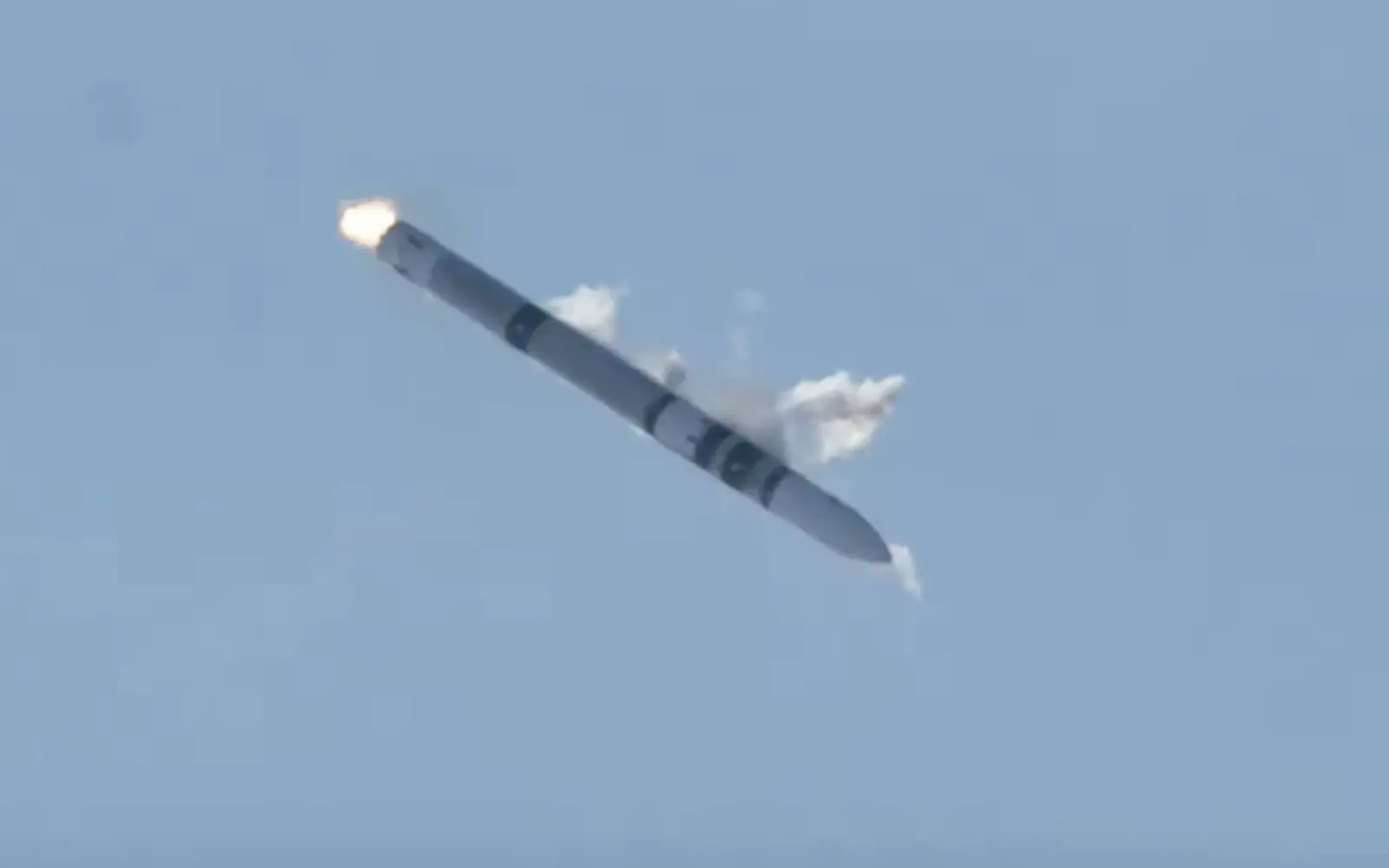
In the first few seconds, the launch looked very promising: Isar Aerospace’s Spectrum rocket lifted off powerfully from the launch site in Andøya, Norway, on Sunday afternoon, rising vertically into the sky above the snowy landscape of northern Norway. But after just a few seconds, the first German orbital rocket tilted, tipped upside down—and plummeted from the sky.
The startup reported that the rocket crashed into the sea, but the launch pad was undamaged. “Our first test flight met all our expectations and was a great success,” said Isar Aerospace CEO Daniel Metzler in a statement. “We had a clean launch, 30 seconds of flight time, and were even able to validate our flight abort system.” You should also read about “Military Spending Hits Record High in 2024 SIPRI report“
Spectrum rocket: it’s A Historic Moment For The Germany
Even though the Spectrum rocket didn’t reach space, it’s a historic moment for the German economy and European space travel: For the first time, a commercial rocket lifted off from Germany —and for the first time from a launch site in Europe . Although the company Otrag had already worked on a rocket in the 1970s, it never made it into orbit.
Isar Aerospace is now the first of three German Spectrum rocket startups aiming to give Germany its own access to space. Experts see the need for this more urgent than ever. Rocket launches, satellite communications, reconnaissance from space: For a long time, Europe relied heavily on the United States in areas critical to security policy .
But since the Trump administration threatened invasion of former partners like Canada and Greenland, Europe’s restricted access to space appears to be a security risk. While two years ago, German reconnaissance satellites flew into space on a rocket from SpaceX , the company of Trump confidant billionaire Elon Musk, that seems hardly conceivable today. It seems too risky that the US government would learn precise details about the satellites’ capabilities.
Spectrum rocket: An explosive business
At the same time, rocket launches are a booming business. More and more satellite fleets are planned to provide internet from space, detect forest fires, monitor global shipping traffic, or measure methane emissions. While there were a total of around 3,400 active satellites in space at the beginning of 2021, according to the space consultancy Novaspace, an average of 3,700 are now expected to be added every year. That’s ten new satellites every day.
According to Daniel Metzler, co-founder and CEO of Isar Aerospace, some of them will be launched into space on his Spectrum rocket. The founders have been working on the technology in Munich since 2018 and have raised several hundred million euros in capital for it. “We develop all the key components ourselves,” Metzler recently told WirtschaftsWoche, “the engines, the structure, the electronics, and the software.”
A major task for a relatively small company with just over 400 employees. “A rocket is a highly complex system, consisting of 90 percent highly explosive propellant,” says Stefanos Fasoulas, Director of the Institute of Space Systems at the University of Stuttgart. “The other five to ten percent is made up of thousands of individual parts, all of which must function smoothly.” And, if possible, they should weigh nothing, so that one to three percent remains for the payload at the end.
Some errors that can occur in the factory or at the launch site only become apparent during the actual flight. Therefore, the chances of a successful first flight are considered very slim in the industry. “The probability of failure during the first launch is almost 100 percent,” says aerospace expert Fasoulas. This is especially true since Isar Aerospace, like SpaceX , prefers speed to perfection – and then wants to quickly learn from its mistakes.
Take a taxi instead of a bus into space
Compared to the market leader, SpaceX’s Falcon 9 rocket, the Spectrum is relatively small: 28 meters high instead of 69, two meters wide instead of 3.7, and a payload of one ton instead of around 17. And with the giant Starship rocket, which is still in testing, SpaceX aims to launch even larger loads into space. Can the German start-up even compete?
Apparently, for now: The order books are already full until the beginning of 2027, Isar founder Metzler recently revealed. Customer discussions are already underway for the years thereafter. The European Space Agency (ESA), among others, has already booked. “We need to create competition in the construction of launch vehicles ,” ESA CEO Josef Aschabacher told WirtschaftsWoche as early as the end of 2023.
“There’s definitely a gap in the market for smaller transport systems that can transport individual, smaller satellites into space,” says space expert Fasoulas. “Some people prefer taking a taxi to taking a bus.” Instead of waiting for a ride with SpaceX, satellite operators can book their own flight quickly and flexibly with companies like Isar Aerospace.
But the gap to SpaceX is still large, says Hans Königsmann, who served for a long time as vice president of Musk’s space company: “Rockets like those from Isar Aerospace are a step in the right direction,” says Königsmann. “But they are far from being real competition for SpaceX.”
According to statistics from the company BryceTech
According to statistics from the company BryceTech, 83 percent of all payloads flew into space in 2024 on a SpaceX rocket. A total of 134 SpaceX rockets lifted off last year, compared to just three from the European provider Arianespace . No startups have yet launched into space commercially. In Europe, the projects are “still too small and too hesitant,” says Königsmann.
Isar Aerospace CEO Metzler once described it as a mistake not to have thought bigger earlier. But the startup switched gears a few years ago and further developed the rocket so that it could be mass-produced. A 40,000-square-meter factory outside Munich is currently under construction.
Automation and 3D printing are all designed to reduce production costs. While simultaneously enabling up to 40 rocket launches per year, Isar Aerospace hopes to make itself attractive to customers who want to launch a dozen or more satellites into space.
Free flight path over the Arctic
At the same time, the startup has secured a 20-year launch site at the Andoya spaceport in northern Norway . During launches toward the North Pole, the rockets fly over uninhabited terrain and can cause little damage in the event of a crash. Transporting the rockets to the launch site is also easier than, for example, to the European spaceport in French Guiana.
In addition, polar orbits accessible from here are popular with operators of Earth observation satellites. This allows the cameras in space to photograph locations on the Earth at approximately the same time of day, making the images easier to compare.
Now Isar Aerospace must first prove that its rocket can make it into space. The one for the second flight is already ready for launch, and the third is in the works, Metzler recently announced. But the competition isn’t sleeping either. The British start-up Orbex plans to launch its first rocket in Scotland this year, and Latitude from France is also planning a maiden flight. In Germany, Rocket Factory Augsburg and Hyimpulse are working on their own launchers.
Dozens of rocket startups are currently being developed worldwide. “It’s rather unlikely that the majority of them will survive in the market,” says expert Fasoulas. However, several European providers could certainly establish themselves. In addition to technology, the right timing in the market also plays a role. “In my view, the race is still open.”
Isar Aerospace: German Spectrum rocket crashes after successful launch
It was an important premiere: The “Spectrum” rocket from a German start-up launched from Andoya, Norway. The test flight lasted only 30 seconds—still a “great success” for the Bavarian company.
The startup Isar Aerospace has launched the first space rocket from European soil – albeit a short flight. The two-stage “Spectrum” from the young company based in Ottobrunn near Munich lifted off from the Norwegian space station Andoya. The live broadcast showed it crashing immediately afterward.
“Our first test flight met all our expectations and was a great success,” Daniel Metzler, CEO and co-founder of Isar Aerospace, subsequently announced. He spoke of a “clean takeoff” and a flight time of 30 seconds. Metzler had previously stated that such a flight duration on the first attempt would be “a great success.” From the outset, the test flight was intended solely to gather data and experience.
It was the first launch of an orbital rocket in continental Europe outside of Russia. It was also the first rocket launch in Europe to be financed almost entirely with private funds.
“New era of European space travel”
“Today, a new era of European space travel has begun,” Anna Christmann, the German government’s space coordinator, told the Reuters news agency. “The successful test launch of the ‘Spectrum’ launch vehicle marks a milestone for German and European space travel.”
Marie-Christine von Hahn, Managing Director of the German Aerospace Industries Association (BDLI), expressed similar sentiments, calling the first test a groundbreaking step for German space travel and a strong demonstration of innovative strength.
Planned launch postponed several times
As seen in the live broadcast, the unloaded rocket initially flew steeply upwards on its maiden flight. After a few seconds, it tilted, rotated 180 degrees, and plunged into the sea. “Thanks to strict safety procedures” by Isar Aerospace and the spaceport on the Norwegian Arctic island of Andöya, the personnel involved in the rocket launch were never in danger, the Munich-based company stated.
Meanwhile, the state-run spaceport on Andoya reported an “incident,” prompting the activation of a “crisis response system.” According to local police, however, there were no injuries or material damage.
Previous launch attempts canceled
Previous launch attempts had been canceled due to bad weather. The launch of the test rocket from Norway is set to be a double premiere: not only the first flight for Isar Aerospace, but also the first launch of an orbital launch vehicle in continental Europe.
CEO Metzler had already dampened expectations in advance, saying that the rocket was unlikely to reach orbit. After all, no company had ever placed a rocket into Earth’s orbit on its first orbital flight.
“Ariane” rocket more than twice as big
“Spectrum” is 28 meters long and belongs to the so-called microlaunchers. The rocket has a diameter of two meters and can carry up to one ton of weight. In the future, it will launch small and medium-sized satellites into space. According to current plans, this is already planned for the second flight.
By comparison, the “Falcon 9” from SpaceX, the space company of Trump advisor Elon Musk, is 70 meters long and can carry up to 22.8 tons. The larger version, the “Ariane 6” from the European aerospace company Airbus, measures 62 meters and has a payload of up to 21.6 tons. The latter launches from Kourou in French Guiana, South America.
Conclusion
However, European space travel is struggling with difficulties, such as limited capacity. This could become a problem, especially given the increasingly strained relations with the United States. A successful flight of “Spectrum” in Norway would be a breakthrough for European space travel. As it would allow small satellites to be launched into polar orbits. Isar Aerospace is one of several German space startups aiming to compete with SpaceX.
Andoya is located on an island north of the Arctic Circle. Suborbital rockets have been launched from there, used for research missions, among other things.
Sources used:
- With material from the News agencies dpa and AFP, ntv.de, Reuters news agency, BBC News and CNN reports. The content has been independently analyzed and rewritten to provide original insights.

Welcome to TrendFiTech, your go-to source for the latest trending news, technology updates, and financial insights. Our mission is to provide accurate, informative, and engaging content to keep you updated on global trends, innovations, and market movements.
At TrendFiTech, we cover:
✅ Trending News – Stay informed with the latest happenings worldwide.
✅ Technology – Discover innovations, gadget reviews, and tech trends.
✅ Finance – Get expert insights on investments, business, and economic updates.
We are committed to delivering high-quality, original content while ensuring a user-friendly and informative experience.
Thanks!