
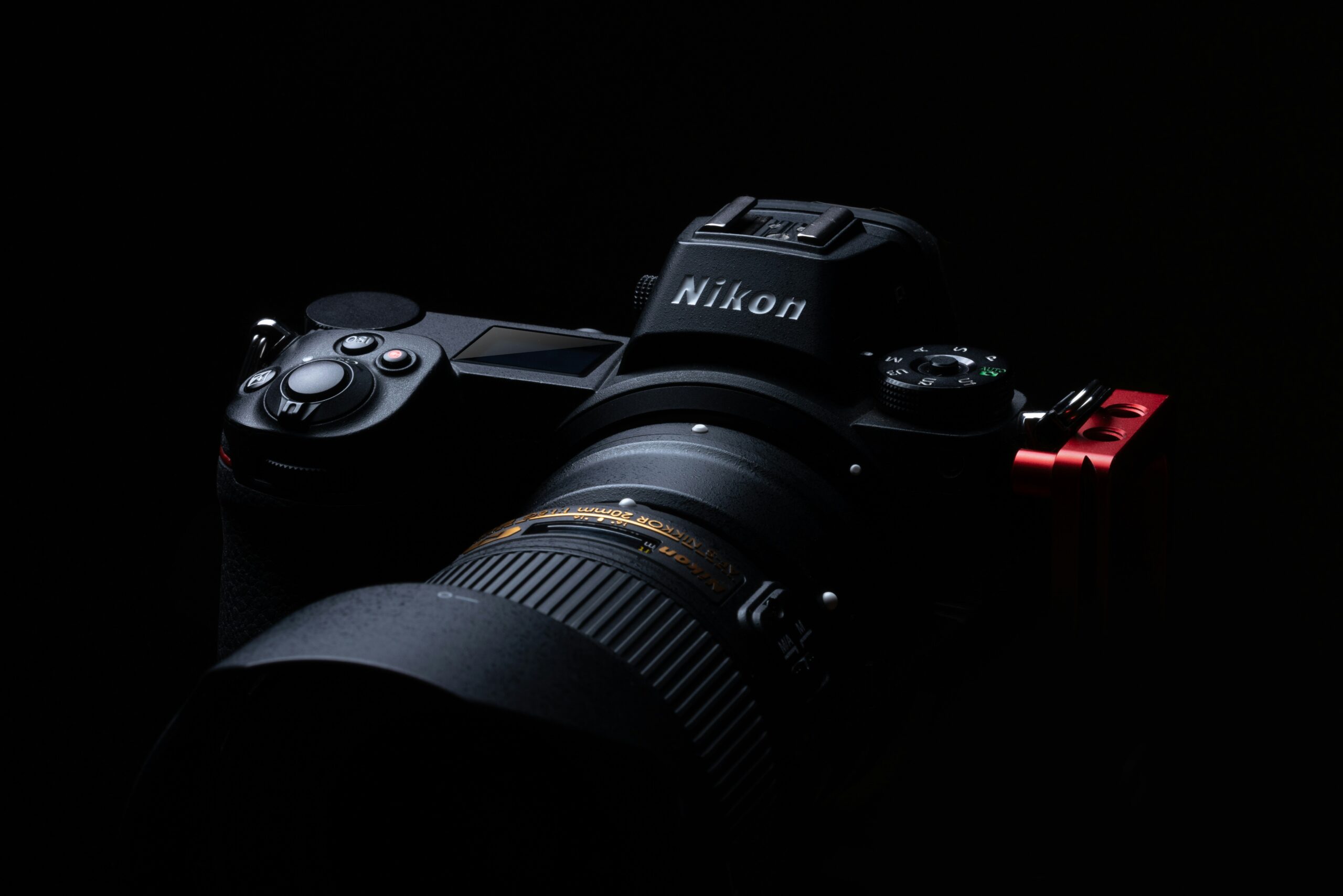
Nikon’s platforming and another Leica clone – Photo news of the week 14/2025
The new full-frame Nikon Z has the CPU of the flagship, and a Kickstarter project wants to look like a Leica – but not in terms of image quality.
When we described Nikon’s platform concept in this column in November 2024 , there was some discussion, not only among the editorial staff. One general consensus was: cameras aren’t cars, after all, because a modular system doesn’t make sense for vastly different products, price points, and application areas. Nikon seems to see things differently, as the new Z5 II also pursues the idea of a unified platform for software and hardware.
Our announcement about the launch has cleared up the technical specs, so let’s get to the special features, and first the question: Where did Nikon cut corners here? The body of the Z5 II costs €1,900, while the Z6 III, the next largest in the larger Z series , costs €3,000, with a partially stacked sensor.
All of this is based on the MSRP, of course; market prices are currently as fluid as they are for many technical devices. Since the new Z5 already offers many professional features, including two SD slots, fast autofocus, weather resistance, and all sorts of interfaces, there must be a catch somewhere in the comparatively low price.
Nikon: No stacked sensor, but…
It’s housed in the aging 24-megapixel sensor from the Zf, which is also not stacked, meaning it has memory on the image converter, allowing for high readout speeds and thus frame rates. Now comes the big but: Since the camera uses the Expeed 7 processor from the flagship Z9, the “small” Nikon can achieve up to 15 frames per second with light RAW compression, and up to 30 with JPEGs. To compare with DSLRs: even with the – existing – mechanical shutter, it still manages 7.8 fps. The aging professional D750 camera (it’s still supported by Nikon Pro) only manages 6.5 frames per second.
And that’s why the platform concept also makes sense for cheaper cameras: Take the high-end processor, which Nikon doesn’t have to develop from scratch and requires no new software, an existing sensor, and add the autofocus of the Z6 III, and you have the Z5 II. Apparently, Nikon saved so much on development and production costs that the aforementioned professional features were still included. A pleasant side effect: The competition is left behind.
Nikon: For DSLR converts and filmmakers
A small but very important detail for filmmakers is also on board, thanks primarily to the software and fast CPU: This true mid-range camera can record 12-bit raw video internally. The acquisition of Red, including its patent for internal raw recording, makes this possible. Nikon’s N-Raw format is now also supported by Adobe Premiere Pro, so nothing stands in the way of professional ambitions. Not bad for a camera under €2,000.
However, Nikon is really pushing the envelope with its normally recommended kit offers. The 24-70mm f/4.0 lens in its native Z version costs €2,500. The smallest bundle with the 24-50mm zoom, which only supports f/4.0 to f/6.3, costs €2,200. A smarter option is to get this kit together with the FTZ-II adapter for the F bayonet. Including the, let’s say, token lens, that costs €2,300, and decades-old Nikkors – and lenses from third-party manufacturers – will fit. However, how well the electronics work will have to be tested on a case-by-case basis. Clearly, Nikon has DSLR converts in mind with the Z5 II. This is also supported by the fact that the widely used EN-EL15 batteries still fit.
Echolens, the retro camera with retro image quality of Nikon
A startup that calls itself “Echolens,” has only a website , and plans to fund a camera via Kickstarter starting in mid-2025, apparently wants to be neither modern nor traditional. There’s no imprint, and the same applies to the Kickstarter campaign. However, a $1 reservation for an accessory—also yet to be announced—when the camera is ready is offered. This doesn’t necessarily mean anything in crowdsourcing; it could well be that someone is actually working on a camera. Even after April 1st, we checked several times to see if the page was still there. It doesn’t seem to be a joke.
The Echolens is supposed to be digital, but it doesn’t have a display, just an optical viewfinder—presumably. All other data, such as the sensor, lens, battery, or memory, isn’t available yet either—but sample images are available that are supposed to look “analog.” They do, but at the level of simple point-and-shoot cameras from 50 years ago: massive vignetting, low in-image contrast, and the same level of resolution. Any mid-range smartphone today can do better. Because even if you want to learn manual photography with the camera in front of your eye and turning dials, the results should be competitive. But, as I said: let’s wait and see what might come next. What does that have to do with Leica, by the way? The Echolens happens to look very similar to a camera from Leica’s M series.
US tariffs could change the camera market
One can only wait and see what happens with the new US tariffs for all countries around the world. Japan, the home of most modern cameras, is on the list with 24 percent of imports into the US. Other Asian countries that manufacture cameras and lenses are also represented with double-digit surcharges. This could also affect the European market if Japanese companies spread any lost sales due to higher prices in the US globally. My colleague Mark Mantel explained how complicated this can be with complex technical products, using PC hardware as an example . And because that’s difficult to predict, all we can do is wait and see.
Analogue photography is cultural heritage
Not exactly a long read, but at least some good news for the weekend is Christine Bruns’ report on UNESCO . It has accepted analogue photography as part of German cultural heritage. So, as Echolens pointed out, this isn’t just a free-market retro hype, but a genuine cultural asset. One that wouldn’t have existed without the Leica 1. And even though it’s been suggested here before, Bernd Kieckhöfel’s story on the 100th anniversary of the first 35mm camera is worth a second reading.
The most important photo news of calendar week 13
Sigma is said to be working on a new “Eye of Sauron”
I want to start with Sigma this week, but first I have to go back in time a bit. In 1988, Canon introduced the EF 200mm f/1.8, which was also known in the scene as the “Eye of Sauron.” The lens was quite unusual, very heavy and large, and only sold about 8,000 units between 1988 and 2004.
And yet, Sigma has now hinted at a remake of this prime lens, in a way. A new 200mm lens with a fast aperture of f/1.8. This would most likely be released for the Sony E-mount and L-mount. The website Sonyalpharumors claims to have received this information from a reliable source – however, leaker Andrea Pizzini emphasizes that further confirmation is still needed.
Additionally, Andrea Pizzini speculates that a 200mm f/1.8 would definitely be part of Sigma’s sports series and would cost around $2,500. Mark, in his news, speculates a price closer to $3,000 – we may find out who’s right in the end in the coming months.
And you? Let me know in the comments if a 200 mm f/2.8 would be interesting for you!
Canon comments on its own cameras with global shutter
Okay, since we weren’t really talking about Canon, here’s some exciting information from Executive Vice President Go Tokura. He told PetaPixel:
“Sensor development requires significant investment, but Canon will continue its current direction of investing in developing its own sensors for our cameras.”
Regarding the development of sensors with a global shutter, Tokura also said that although they are continuing to work internally on the development of corresponding sensors, the disadvantages are currently considered too serious to use the technology in cameras with interchangeable lenses for the mass market.
Sensors with a global shutter work differently in that every pixel on the sensor is read simultaneously. Normally, this happens sequentially, which brings with it disadvantages like rolling shutter or banding. If you want to learn more about this, I recommend my hands-on review of the Sony A9 III on YouTube ! The A9 III is the first consumer DSLR with a global shutter and can shoot up to 120 frames per second. Truly exciting!
Finally, the Canon executive commented on cameras with high-resolution sensors above 50.6 megapixels. Canon is not currently planning a higher-resolution version of its flagship R1, but is apparently still trying to bring a camera with higher resolutions to market. However, Canon does not want to compromise on features such as sensitivity, rolling shutter effects, or burst speed. The challenge for Tokura is therefore to develop a balanced product—but the current time for a market launch is still too early.
So, to summarize briefly: A resounding yes to Canon’s own sensors. Global shutter is out for now, and we shouldn’t expect high-megapixel sensors from Canon this year either.
Nikon has introduced the Z5 II
Last week, According to a report by PetaPixel, the new Nikon Z5 II includes. Nikon introduced a particularly well-balanced camera: the Z5 II . The successor to the Z5 is priced at €1,899! I usually tell you the price at the end of a review – but this time I think it’s quite interesting to examine the following specs from a price perspective. So let’s dive in!
The Z5 II uses the same 24-megapixel back-illuminated CMOS sensor as the Nikon Zf. This works with the Expeed 7 processor, which is said to deliver significant improvements in autofocus. Compared to the previous Z5, autofocus is said to be 68 percent faster and now offers detection features such as 3D tracking for eyes, faces, heads, animals, birds, and more.
In PetaPixel’s initial test, the autofocus performed significantly better than that of the still-available Z6 II without the Expeed 7 processor. At the same time, the Z5 II also outperforms the second-generation Z6 in image stabilization. It is said to be capable of 7.5 f-stops of autofocus and can orient itself to the current autofocus point for better results.
Nikon has also improved the continuous shooting speed. From just 4.5 frames per second, the camera now shoots 14 JPEGs and 11 RAWs per second with a mechanical shutter, and up to 30 frames per second with an electronic shutter.
There are minor upgrades to the EVF and display
There are minor upgrades to the EVF and display. While the electronic viewfinder relies on the same resolution of 3.69 million pixels, the brightness is three times higher at 3,000 nits. The display measures 3.2 inches and now has a resolution of 2.1 million pixels. Fortunately, you can also fold the display outward to see yourself while filming. Photography First is slowly becoming a thing of the past at Nikon, too.
Speaking of filming: The camera can shoot 4K at 60 frames per second with DX crop factor and 30 frames per second without crop with 6K oversampling. In Full HD, the frame rate increases to 120 frames per second – I also find internal RAW recording with 12-bit color depth impressive for the price. N-Log, a microphone and headphone jack, and the ability to use the camera as a webcam are also included.
The body isn’t fundamentally different, but it leaves nothing to be desired. The camera weighs 700 grams, there’s a new Picture Control knob for applying color profiles, the body is splash- and dust-resistant, and, most pleasingly, there’s a joystick on the back.
You can get all of this from Nikon for 1,899 euros – which is still a lot of money, of course – but in my full-frame camera comparison under 2,000 euros from last year, it would have performed even better than the Z6 II.
What do you think of the Z5 II? Feel free to share your thoughts in the comments!
DJI Mavic 4 Pro to arrive later
According to recent rumors, DJI was actually planning to unveil the Mavic 4 Pro in April. And thus finally unveil its new flagship drone. Now, the first images have surfaced online, purporting to show the drone’s final design. As expected, we see a LiDAR sensor under the left front propeller. And there’s a new rubber stand that protects the camera module when landing.
However, well-known DJI leaker Jaspar Ellens is now talking about delays in the drone’s launch. That is, the sales launch, not the takeoff. wink: Instead of April 24. The drone is now scheduled to be unveiled in May. There’s currently no pricing information for the drone itself – but there is for the accessories. A new battery is expected to cost $180, the parallel charging station $100. Replacement propellers are listed for $19, and an electronic ND filter costs $220. Those are quite reasonable prices!
Question: Do projects like the Echolens have a place in the camera market?
Finally, a curiosity that I find quite interesting.
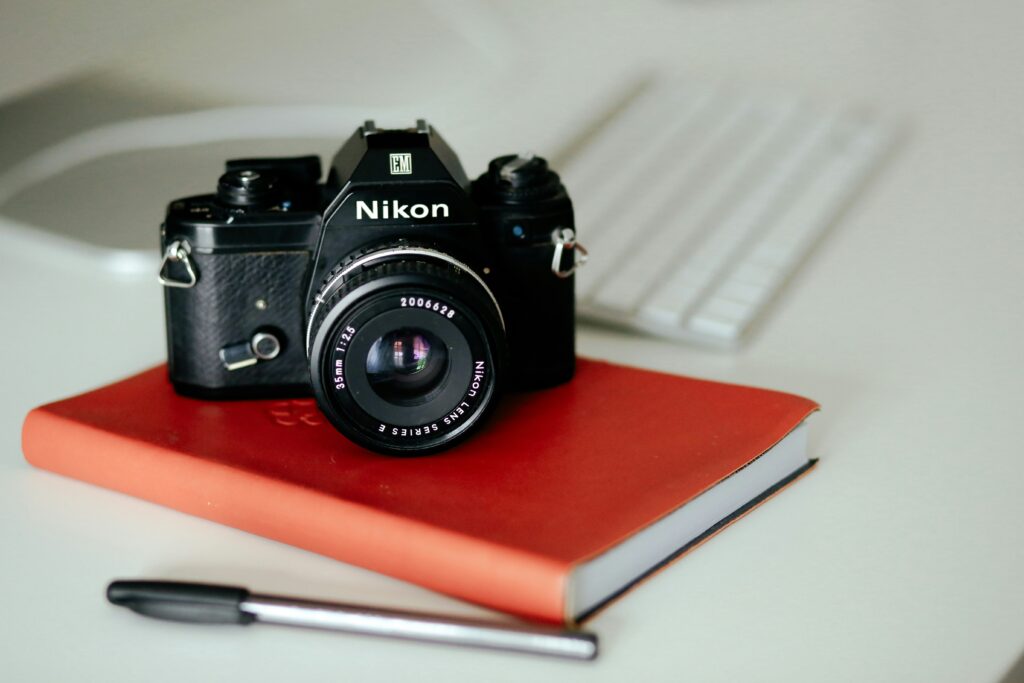
The relatively unknown manufacturer Echolens has unveiled a new crowdfunding project . The camera of the same name is intended to be a “retro-style digital camera”. For “anyone who loves the charm of film but wants the convenience of digital technology.”
The camera looks very much like a Leica rangefinder camera and offers modern features like Wi-Fi and Bluetooth. It is controlled via three dials. Echolens forgoes a display and instead equips the camera with an optical viewfinder.
The image quality is very reminiscent of early digital cameras. But Echolens integrates various filters to mimic the style of analog photos. I’ve included a few examples for you.
And why do I find this exciting? Well, while we photo enthusiasts and even professional photographers seek the greatest possible reliability. And quality in cameras and are happy to pay used car prices for it. There are also reasons why many people still buy analog disposable cameras. I see them floating around at birthdays and parties every now and then. And memories and fun are the main focus here. So, an Echolens camera isn’t actually such a bad alternative.
Conclusion
At the same time, the design is so closely aligned with Leica. That it’s likely that they’re also trying to appeal to the “I wear a Leica because it’s stylish” crowd. Then, of course, we’re entering prestige areas that have little to do with photography.
I’m therefore torn about whether I should like or hate such products – they don’t really harm anyone. Unless they’re overpriced and ultimately take worse photos than any entry-level phone.
This article summarizes key points from recent camera news, including highlights from PetaPixel and SonyAlphaRumors.

Welcome to TrendFiTech, your go-to source for the latest trending news, technology updates, and financial insights. Our mission is to provide accurate, informative, and engaging content to keep you updated on global trends, innovations, and market movements.
At TrendFiTech, we cover:
✅ Trending News – Stay informed with the latest happenings worldwide.
✅ Technology – Discover innovations, gadget reviews, and tech trends.
✅ Finance – Get expert insights on investments, business, and economic updates.
We are committed to delivering high-quality, original content while ensuring a user-friendly and informative experience.
Thanks!