
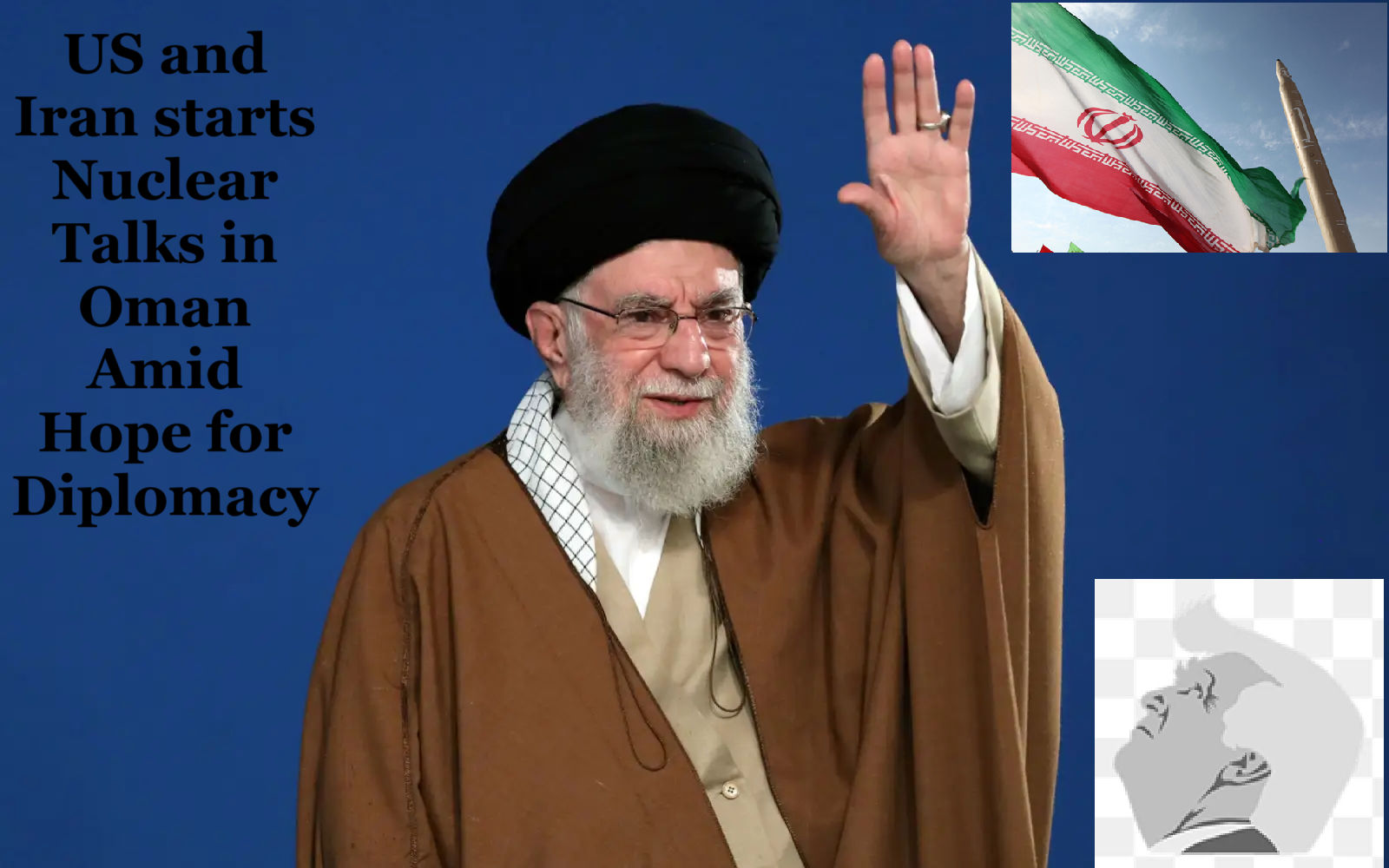
Tehran’s nuclear program: US indicates willingness to compromise in nuclear talks with Iran
The US and Iran plan to discuss Tehran’s controversial nuclear program on Saturday. US Special Envoy Steve Witkoff outlined the Trump administration’s negotiating line ahead of the meeting.
The United States indicated flexibility in its position ahead of today’s start of high-level talks with Iran about Tehran’s controversial nuclear program. Iran must not be capable of building a nuclear bomb; that is the “red line” for the United States, US special envoy Steve Witkoff told the Wall Street Journal.
The US newspaper quoted Witkoff as saying that the US would enter into dialogue demanding the dismantling of Iran’s nuclear program. That was the starting point, Witkoff said, but added: “That doesn’t mean, by the way, that we won’t find other ways to reach a compromise between the two countries.”
Witkoff and Iranian Foreign Minister Abbas Aragchi are expected today for the start of talks between senior representatives of the two countries in the Sultanate of Oman.
Trump’s threat
Donald Trump had threatened Iran with an attack if Tehran did not agree to a new agreement limiting its nuclear program. According to Iran, the bilateral talks in Oman on the Persian Gulf are being conducted indirectly through a mediator. However, a direct meeting between Witkoff and Aragchi also seems possible.
Western states have accused Iran of developing nuclear weapons for years, a charge Tehran denies. In 2015, Iran signed an agreement that provided for the easing of sanctions in return for curbs on its nuclear program. However, during Trump’s first presidency, the United States unilaterally withdrew from the agreement in 2018. After returning to the White House, Trump urged Iran to enter into new nuclear talks.
IAEA warning
For civilian use, such as nuclear power, uranium only needs to be slightly enriched. However, Iran is currently enriching uranium to a purity of 60 percent. The head of the International Atomic Energy Agency (IAEA), Rafael Grossi, has repeatedly pointed out that Iran is the only non-nuclear state producing such near-weapons-grade material.
USA and Iran rely on Oman as mediator in nuclear talks
The US and Iran want to resume talks in Oman. Their host is well-versed in sensitive missions. For years, the Sultanate has been praised for its secrecy and neutrality.
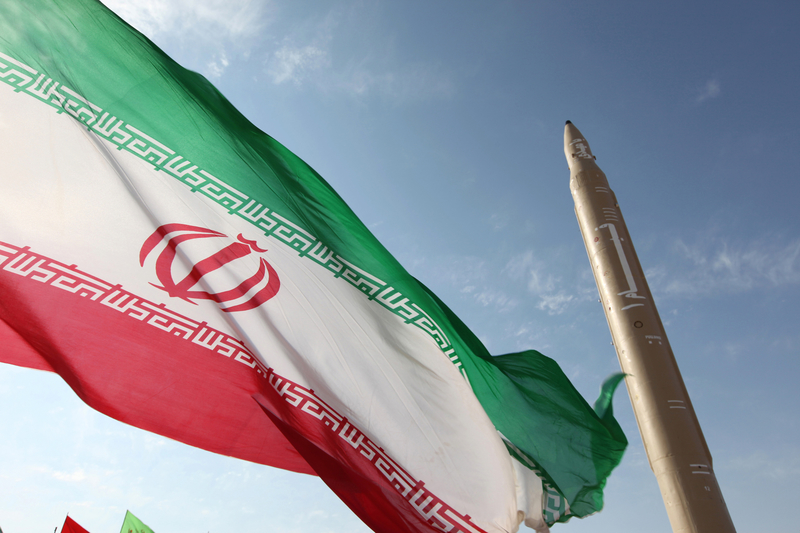
A quiet country that masters diplomacy: Oman, located in the far east of the Arabian Peninsula, is a country that rarely makes headlines. Known for its beautiful landscapes and popular with tourists, Oman is politically considered something like the Switzerland of the Middle East: It keeps its distance.
“We don’t take sides, neither for one side nor the other,” former Omani Foreign Minister Yusuf bin Alawi said years ago. “We try to allow both sides to do what we believe is good for them.”
“Oman is a moderator of the region”
In contrast to their contentious Gulf neighbors with their large egos and need for recognition—Saudi Arabia, the United Arab Emirates, Qatar, and, on the other side of the Persian Gulf, Iran—Oman is considered modest and reserved. A trait that is apparently also reflected in its politics. For more than five decades, the country has not been involved in any conflict, instead repeatedly serving as a successful mediator.
“The Sultanate of Oman is a moderator of the region,” says US political science professor Marc O’Reilly, who has researched Oman for years. This is a historic role. “Oman controlled large parts of the Indian Ocean and had good relations with many countries for centuries—and thus, it has gained a diplomatic reputation.”
One hundred percent discretion
And this reputation continues to this day: When the Iranian Foreign Minister and the American Special Envoy Wittkoff hold new talks in Oman about the Iranian nuclear program, both sides know that they can rely 100 percent on their host and his discretion.
Oman prefers quiet, unobtrusive diplomacy. They don’t want the attention that Qatar, for example, seeks. They stay in the background, facilitating negotiations without demanding glory and honor in the event of success.
Politics Professor Marc O’Reilly
Discretion that pays off. This was the case in 2015, when the foundation for the nuclear deal with Iran was laid in Oman. Oman has also always pulled the strings in the rapprochement between arch-enemies Saudi Arabia and Iran, or in the release of hostages from Yemen.
Years ago, then-US Secretary of State John Kerry explicitly praised Oman’s role: “His Majesty the Sultan of Oman has helped us do things that would otherwise have been very difficult,” Kerry said at the time. Oman is contributing to the dialogue. “We are grateful for that.”
Working in silence
Whether in a secluded beach villa belonging to the Sultan or a castle in the mountains, Oman ensures that negotiators can work undisturbed. Journalists are not welcome. Experience has shown that little leaks out of difficult discussions.
“The Sultanate and Omani decision-makers are known for not releasing many interim statements in such cases,” says Omani political scientist Mohamed Al-Araimi. “They work quietly until the mission is accomplished and finally announced.”
Omanis often play the postman
According to reports, the delegations are meeting in separate rooms without meeting each other – and sending each other messages and offers. Not via text message, of course, but via a third party: The Omanis often act as postmen, delivering messages from one negotiating room to another. They see themselves less as active negotiators and more as moderators, facilitators, and enablers when enemies seek dialogue.
Oman relies on good relations with all sides: with the West and also with Iran. Oman’s good relationship with Iran has recently brought international criticism. However, this historically developed relationship of trust benefits both sides, economically and politically, say Oman experts such as US political analyst JE Peterson. “This relationship helps Iran negotiate with major powers like the US or Saudi Arabia. And it benefits Oman in maintaining stability in the region and strengthening its own foreign policy.”
A first sniff
There is no other place in the world that all sides trust as much as Oman, say political observers. This is no different this time: After US President Donald Trump withdrew the nuclear agreement during his first term in office, the opponents are now meeting again in Oman – a first sniff of the water.
“These aren’t concrete negotiations on an agreement, but initial talks – a test to assess the situation,” explains Omani political scientist Al-Araimi. It’s a first step for further steps that could follow later. “Perhaps this meeting is the beginning of a later agreement, not just on the nuclear program.”
“Turning optimism into reality”
And this prospect seems to be enough glory for the Omanis: Unlike Qatar, where every Gaza mediation is celebrated with media attention, Saudi Arabia, which strives for a new image and international recognition on the world stage, and the United Arab Emirates, which relies on glamour and glittering Gulf metropolises, Oman remains true to itself – and quietly rejoices when diplomacy has once again succeeded. And, in general, people in Oman think positively, Foreign Minister Badr Albusaeedy said a few months ago:
Optimism is always our motto, and we continue to work to turn that optimism into reality.
Badr Albusaeedy
Whether Omani optimism can prevail in the current tense situation between Iran on the one hand. And the US and Israel on the other is questionable. But it’s clearly worth a try.
Tehran fears government overthrow: US gives Iran quiet hope ahead of nuclear talks
With Oman’s mediation, the deadlocked nuclear dispute between the West and the Islamic Republic of Iran is gaining momentum. This represents a step backward for both countries. However, the pressure on Iran is far greater.
Ahead of talks with Iran. US Special Envoy Steve Witkoff indicated flexibility in the US government’s position on Tehran’s controversial nuclear program. While the US will begin negotiations by demanding that Iran completely dismantle its nuclear program. Witkoff told the US newspaper “Wall Street Journal.” However, that does not mean “we won’t find another way to compromise,” he added. However, the red line remains nuclear weapons.
US President Donald Trump also made it clear that Iranian nuclear weapons were out of the question for the US. “I want Iran to be a wonderful, great, happy country. But they can’t have nuclear weapons,” Trump told reporters aboard Air Force One.
Witkoff will hold talks on Tehran’s nuclear program in Oman later today. Foreign Minister Abbas Aragchi will travel on Iran’s behalf. While Trump had announced direct talks, Iran spoke of indirect talks. Tehran stated in advance that it was seeking a “genuine and fair” agreement.
Western states have accused Iran of building nuclear weapons for years
Western states have accused Iran of building nuclear weapons for years. Therean denies this. In 2015, Iran signed an agreement that provided for the easing of sanctions in return for curtailing its nuclear program. During Trump’s first presidency, the US unilaterally withdrew from the agreement in 2018. After returning to the White House. Trump is urging Iran to enter into new nuclear talks – threatening military action if they fail.
According to the New York Times. The threat in Tehran is fueling fears that the country’s political leadership could be overthrown. Iran is suffering from a severe economic crisis, with no continuous supply of water, gas, or electricity. A military conflict with the US would further weaken the economy and trigger protests in the country. Accordingly, President Masoud Pezeshkian had to pressure Iran’s Supreme Leader, Ayatollah Ali Khamenei, to begin talks with the US. Khamenei had previously described the resumption of negotiations as “idiotic.”
Sources used:
- With material from the News agencies Reuters news agency, Apr, and dpa. With information from news.google.com. Statement and reports from reputable news sources, including Wikipedia, BBC, CNN. The content has been independently analyzed and rewritten to provide original insights.

Welcome to TrendFiTech, your go-to source for the latest trending news, technology updates, and financial insights. Our mission is to provide accurate, informative, and engaging content to keep you updated on global trends, innovations, and market movements.
At TrendFiTech, we cover:
✅ Trending News – Stay informed with the latest happenings worldwide.
✅ Technology – Discover innovations, gadget reviews, and tech trends.
✅ Finance – Get expert insights on investments, business, and economic updates.
We are committed to delivering high-quality, original content while ensuring a user-friendly and informative experience.
Thanks!