

Lyrids over Bremen: When it’s worth looking at the night sky
Don’t miss the Lyrids meteor shower over Bremen! Up to 20 shooting stars per hour expected from April 16–25. Best viewing on April 22 before dawn.” Up to 20 shooting stars per hour: Those who get up early in Bremen can soon be rewarded with a magnificent view. But will the weather cooperate?
Wake up early and be rewarded with a spectacular view: This is exactly what’s possible around
Bremen from April 16th to 25th . This is when the Earth will pass through a dust trail left by comet C/1861 G1 (Thatcher) – the origin of the annual Lyrid meteor shower, which brings dozens of shooting stars. The shower reaches its peak on the night of April 22nd. Under optimal conditions, up to 20 shooting stars per hour are possible. Learn More on Trendfitech.
For skywatchers in Bremen, it’s worth looking northeast. According to experience in recent years, the best viewing conditions are between 2 and 5 a.m. on April 22nd. This is when the constellation is high in the sky. It’s best observed with the naked eye in a dark location far from the city center. Recommended spots are the Stadtwaldsee lake or the shore of Lake Werder. There are also numerous suitable locations around Bremen that offer an unobstructed view of this celestial spectacle. Learn more here.
Shooting stars over Bremen – Are clouds obscuring the view?
According to the German Weather Service (DWD), the forecast for the night is still uncertain. However, clear spells are possible. Those who want to play it safe can rely on live streams from major observatories or digital planetarium apps.
The Lyrids are among the oldest documented meteor showers in human history: Chinese astronomers are said to have observed them over 2,700 years ago. The so-called radiant, or apparent origin of the meteors, lies in the constellation Lyra, near the bright star Vega.
After the Lyrids, Bremen stargazers can already look forward to the next celestial highlight: On May 6, the so-called Eta Aquariid meteor shower reaches its peak. This meteor shower originates from Halley’s Comet and promises up to 50 meteors per hour. Another good reason to get up early.
Lyrid meteor shower reaches peak
There are currently an increasing number of shooting stars visible in the night sky. These are part of the Lyrid meteor shower, which is reaching its peak this year.
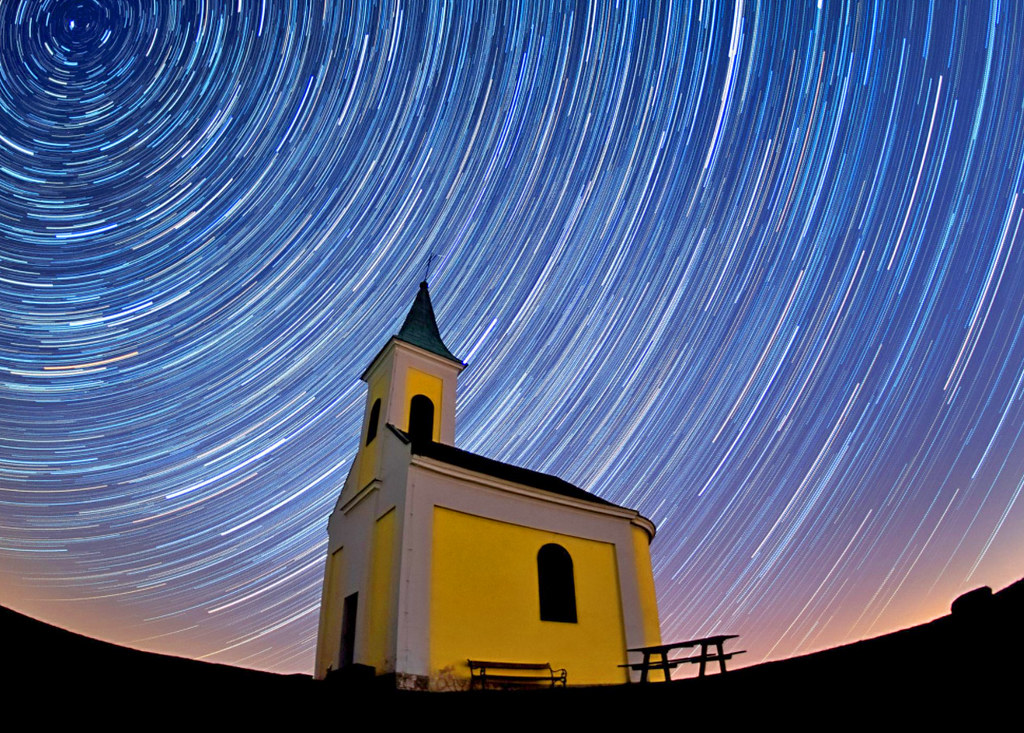
For several days now, isolated shooting stars have been visible; they are part of the Lyrid meteor shower.
DIGITAL FERNSEHEN reported on another meteor shower at the end of last year. The Lyrids are named after the constellation Lyra, whose Latin name is Lyra (or Greek “λύρα”).
The radiant, i.e. the imaginary point from which the shooting stars appear to come, is located near the Lyra constellation. The brightest star in the constellation is Vega, which is one of the brightest stars in the night sky. At a distance of 25 light years, Vega is relatively close to the Sun and has a brightness of approximately 0.03 mag.
This apparent brightness is close to 0 mag, as Vega was previously used as the zero point in the photometric determination of the brightness of celestial bodies. This was also due to the fact that the brightness of the star is relatively constant.
The peak of the Lyrid meteor shower occurs on April 22nd each year. This means that most of these shooting stars can probably be observed on this date. The number of shooting stars visible during the Lyrids is normally “only” 18 ZHR, but can also be significantly higher spontaneously and irregularly.
By comparison: the well-known Perseid meteor shower has a ZHR (Zenithal Hourly Rate) of 110. This number indicates the number of possible visible meteors per hour. Also unfavorable for observing the Lyrids this year is that the half moon will be in the sky and may outshine the shooting stars. The website meteorshowers.org offers a visualization of meteor showers.
Comet is the origin of the Lyrids
The origin of the Lyrids is Comet C/1861 G1 (Thatcher), which, according to current calculations, takes approximately 423 years to orbit the Sun. After being visible to the naked eye in 1861, it will not reach the point in its orbit closest to the Sun again until around the year 2284.
According to calculations, after its appearance in 1861, the comet will come relatively close to Earth’s orbit around the Sun. The Lyrid meteor shower is triggered by particles it leaves behind in its orbit. This is the same phenomenon that triggers the aforementioned Perseids, where Comet 109P/Swift-Tuttle is responsible.
Weather in Thuringia: Crazy celestial phenomenon on the way! Expert offers hope
A rare celestial spectacle could soon be visible in the Free State. But will the weather in Thuringia cooperate?
A meteor shower could cause a lot of astonishment in the second half of April. That’s assuming our weather cooperates in Thuringia!
The Lyrids are returning, leaving glowing trails in the sky. This natural spectacle is one of the oldest known meteor showers and is active every April. Read here what the weather in Thuringia has to do with it.
Weather in Thuringia: Lyrids approaching
The Lyrids’ peak is expected on the night of April 21-22. If the weather in Thuringia provides clear skies, up to 18 shooting stars per hour are possible. Under certain conditions, there may even be a small outburst—with even more meteors. The second half of the night will be particularly good.
According to experts, the best time to observe the spectacle is between 2 and 5 a.m. The darker the location, the better the visibility. However, city lights should be avoided, as light pollution can impair visibility. Binoculars aren’t necessary—the naked eye is sufficient. Depending on the weather in Thuringia, warm clothing is recommended. But can we even look forward to a clear view of the Lyrids this year?
Hope for good weather
Unfortunately, it’s not yet possible to say for sure whether the weather in Thuringia will cooperate. Weather expert Dominik Jung is cautiously optimistic: “Currently, it looks like a slightly cloudy sky, so there’s a chance we might be able to see some of the spectacle,” says weather expert Dominik Jung of wetter.net in response to a query from Thüringen24.
Thüringen24 also contacted the Braunschweig-Hondelage Star Friends Association. They confirmed the expected peak: “The peak is expected around April 21/22, with around 20 shooting stars per hour in good weather,” they say. All that’s needed for observation is good weather in Thuringia, a dark sky, and clear visibility.
Sources used:
- With material from the News agencies dpa and AFP, Reuters news agency,(WDR weather department.), BBC News and CNN reports. The content has been independently analyzed and rewritten to provide original insights.

Welcome to TrendFiTech, your go-to source for the latest trending news, technology updates, and financial insights. Our mission is to provide accurate, informative, and engaging content to keep you updated on global trends, innovations, and market movements.
At TrendFiTech, we cover:
✅ Trending News – Stay informed with the latest happenings worldwide.
✅ Technology – Discover innovations, gadget reviews, and tech trends.
✅ Finance – Get expert insights on investments, business, and economic updates.
We are committed to delivering high-quality, original content while ensuring a user-friendly and informative experience.
Thanks!