

Exhibition tour at Auto China Shanghai 2025: Return to normality
At Auto China Shanghai, the spirit of optimism that Chinese manufacturers created two years ago with the diversity and maturity of their new launches is missing.
When Auto China Shanghai reopened its doors in Shanghai for the first time after the COVID-19 disruption in 2023, it was a shock for Western automakers. The sheer volume and diversity of products from Chinese automakers was unexpected. A comparable flood of innovations was lacking this time around. Even major companies BYD, Nio, and Zeekr aren’t bringing any particular highlights. Not even China has virtually unlimited resources for innovations, since the giant country’s growth has been running at a mere four percent.
Less crowding
But that doesn’t mean there aren’t still a few highlights to marvel at. The Dongfeng Warrior presents a martial appearance in the best Chinese tradition, and BYD’s premium brand Denza announces a Porsche 911 competitor with the Z concept coupe. Of course, there are still a few classic eye-catchers, like the plush cars from MiniEV or the small helicopter from Changan. But otherwise, it’s business as usual for the car manufacturers from China. The crowds in the halls were also nowhere near as dense as they were 24 months ago.
Volvo presents the EM90, Zeekr the SUV 9X, based on the same platform. The state-owned brand Honqi is showing the plug-in hybrid model HS9. Aito with the M9, Xpeng with the X9, and LiAuto with the aerodynamically shaped Mega also aim to appeal to families. The off-road specialists at Haval are focusing on a mass-market look with the SUV Max. The Jetour G600 is powerful and angular. With its premium Jetour division, Chery focuses on cars with high margins. Clones of successful Western models, such as the Geely Galaxy Cruiser, whose front end is a direct copy of the Ford Bronco, can still be seen at Chinese auto shows.
Auto China Shanghai: Off-road hybrid with four-liter V8
Anyone who thinks that China is all about electric mobility is at least a little bit mistaken. The rustic mud-wreckers from Tank proudly present a V8 combustion engine and, with the Hi4T, a matching car. To adjust fuel consumption to the limits, the engine operates in a hybrid drivetrain.
Audi is desperately fighting for market share in China and is hoping for new success with its many new products. Headlining the lineup at the trade fair is, of course, the Audi E5. An electric station wagon developed jointly with SAIC and tailored to the Chinese market. The electric car has an 800-volt architecture, can recharge to a range of 370 km in ten minutes under ideal conditions, and can travel up to 770 km in its most economical version.
Both figures refer to the Chinese CLTC consumption cycle, not the more stringent WLTP standard common in this country. Audi will also be exhibiting the four localized models A6L e-tron, Q5L, and A5L from the FAW cooperation, as well as the A5L Sportback, at the trade fair stand.
Auto China Shanghai: Volkswagen announces 30 new models
Volkswagen rolled three concept vehicles into the gigantic exhibition complex: the VW ID.Aura, VW ID.Era, and VW ID.Evo. The trio represents a product offensive that aims to bring over 30 new models to China by the end of 2027. Twenty of these are New Energy Vehicles, which in China also include some hybrids. With the Vision V concept car, Mercedes is reaffirming its intention to gain a foothold in the luxury MPV segment. The Mercedes CLA was also present in Shanghai. BMW is celebrating itself without showing any real innovations. Honda is bringing out its dynamic side with the GT. Toyota is delivering a dual offering consisting of the Toyota bz7 electric car and the Lexus ES luxury sedan, which is also available as an electric car.
Automotive newcomer Xiaomi, previously known primarily in the smartphone market, originally planned to bring the YU7 SUV to the trade fair. But now the SU7 Ultra is on the stand. The powerful sedan with 1103 kW costs around 35 percent less and, at 529,900 yuan (approximately 63,000 euros), significantly undercuts both the Tesla Model S Plaid and the Porsche Taycan Turbo GT with the Weissach package. The fact that in a country with strictly enforced speed limits on the one hand and daily mega-traffic jams around the huge metropolises on the other, such drive performance can practically never be fully enjoyed has not bothered the small target group so far.
Electric cars in Auto China Shanghai: Few Volkswagens in the People’s Republic
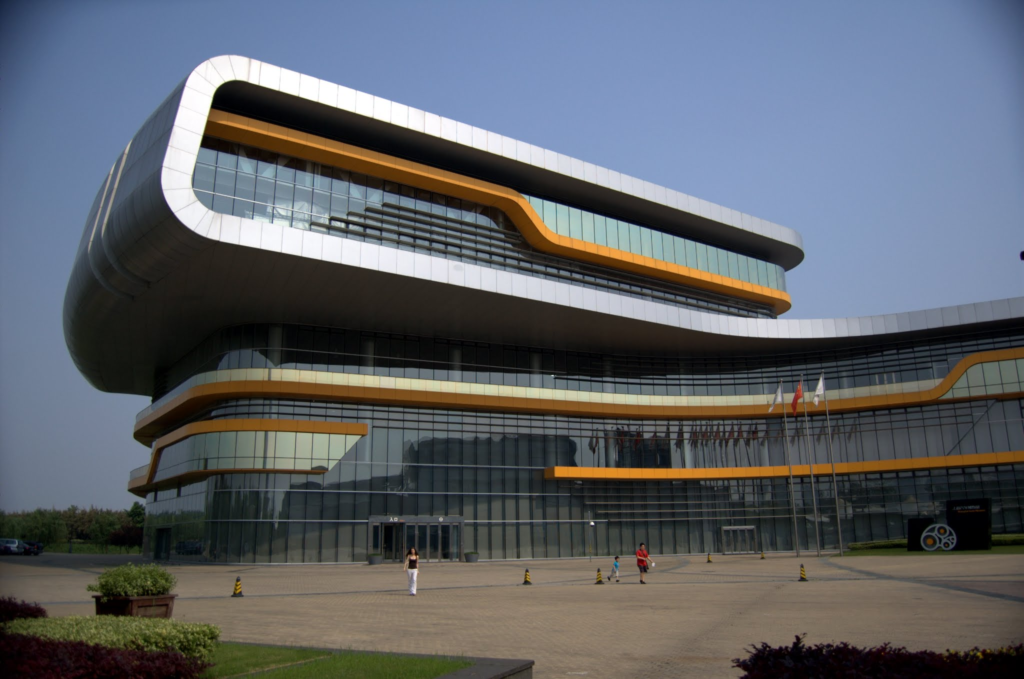
At the industry trade fair in Shanghai, it became clear that China is the global market leader in electric cars. But German companies are starting to catch up.
When the Shanghai Auto Show opens its doors, visitors are offered a glimpse into the future. “What’s happening right now is a transformation of the century,” says Mercedes CEO Ola Källenius during his speech on the company’s own stage. What he means is the everyday reality on Chinese streets: No other country in the world has anywhere near as many charging stations, as many electric cars, and as advanced self-driving taxis as in China.
market in the Middle Kingdom
The market in the Middle Kingdom has long been the largest in the world. But it has also long been the technological leader, the most innovative, and, above all, the most competitive. To paraphrase Sinatra: Only those who can assert themselves in China will survive as global car manufacturers.
A look at the numbers: According to the China Association of Automobile Manufacturers (CAAM), well over 31 million vehicles were produced and sold last year. A good third of these are electric cars, although many of them, so-called “hybrids,” also feature a combustion engine. Furthermore, with nearly six million vehicle exports annually, China is now also very successfully entering international markets. While the new players are still struggling in Europe , they are already omnipresent in Russia, Brazil, and Mexico.
Just a few years ago, German auto executives in the People’s Republic, perhaps arrogant due to their own success, merely smiled wearily at the Chinese company’s ambitious plans. After all, the country’s founder, Mao Zedong, had been trying to build a national auto industry since the 1950s. Despite significant investments, the results were more than modest. Now, however, the laughter of German auto executives has given way to a certain awe.
combustion engine skipped
The success story of the Chinese automotive industry can only be understood by examining the concept of “leapfrogging,” the deliberate “skipping” of development stages. While the Chinese eventually had to accept that they would never be able to compete with German engineering in the field of combustion engines, they saw the emerging shift to electric mobility as a historic opportunity: The cards would now be reshuffled, they calculated. So they went “all in.”
The central government in Beijing began its first pilot projects as early as 2001. Since then, it has laid the foundation for the new industry in five-year plans: It has consistently invested in charging station infrastructure, established a battery production chain, and provided massive subsidies to car manufacturers.
Conclusion
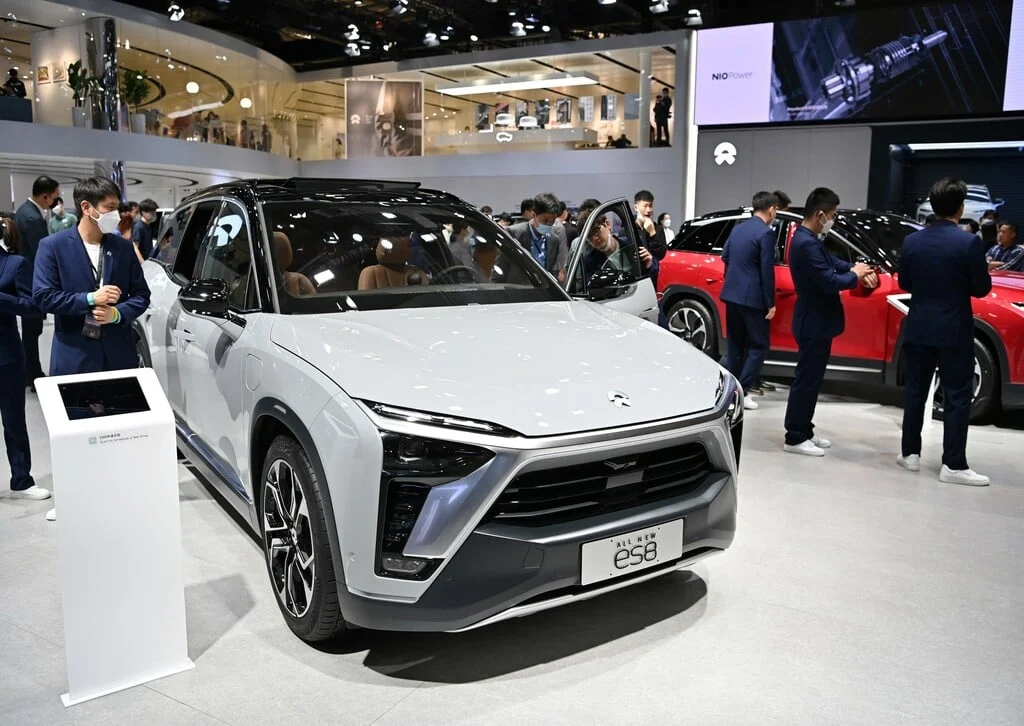
In addition, the party leadership has radically accelerated the consumer shift to electric cars with harsh sanctions: For years, it has been virtually impossible to obtain a license for combustion-engine cars in major Chinese cities. These have been severely restricted. Electric cars, on the other hand, have been artificially kept attractive with purchase incentives.
Ironically, it also helped that many Chinese brands had no experience in traditional car manufacturing. Quite a few newcomers had previously worked for battery manufacturers or tech companies. They therefore forged new paths, conceiving the vehicle of the future more as a “smartphone on four wheels.” Hydraulics and gap dimensions were secondary. The strategy was well received by the mostly young, tech-savvy Chinese customer base.
But China’s comprehensive industrial policy also has its downsides – primarily the immense investment sums, some of which have sunk into corruption. At the same time, the market was heated up by the tempting subsidies to such an extent that, at times, several hundred startups sprang up.
This led to a cannibalistic price war that continues to this day
This led to a cannibalistic price war that continues to this day. Only a handful of car companies are currently making profits in China. Most will not survive the market consolidation in the coming years. The select national champions, however, will rise stronger than ever.
At the Shanghai Auto Show, it’s also clearer than ever that new players like BYD, Nio, and others have long been setting the tone. This is especially evident in the fact that the former champions from Germany are now learning from the Chinese players: larger displays in cars, more technical playfulness, better connectivity – the Germans are adapting.
In addition, more and more of them are entering into collaborations with Chinese companies. Simply to benefit from their technological leadership. Volkswagen is currently pursuing a strategic partnership with battery manufacturer CATL. And BMW is collaborating with Hangzhou-based tech giant Alibaba on its AI language model. This would have been unthinkable just a few years ago. But the gravity of the situation has virtually forced this paradigm shift. Volkswagen’s sales figures fell by around 9 percent last year. While BMW’s fell by 13 percent – and the trend is rising.
German companies’ race to catch up has been slow in recent years, with electric cars largely ignored in China. However, a turning point is now emerging. Volkswagen, in particular, seems to have regained its “mojo”. The electric cars presented. The Wolfsburg-based company received almost universally positive feedback from trade fair visitors. Due to their design, enhanced infotainment, and longer battery ranges.
However, it remains questionable to what extent Germany’s recovery will be reflected in regained market share. Domestic consumption in China is weakening, the boom years are over for now. And the sword of Damocles looms over everything in the form of Trump’s tariff policy.
Sources used:
- With material from the News agencies dpa and AFP, ntv.de, Reuters news agency, BBC News and CNN reports. The content has been independently analyzed and rewritten to provide original insights.

Welcome to TrendFiTech, your go-to source for the latest trending news, technology updates, and financial insights. Our mission is to provide accurate, informative, and engaging content to keep you updated on global trends, innovations, and market movements.
At TrendFiTech, we cover:
✅ Trending News – Stay informed with the latest happenings worldwide.
✅ Technology – Discover innovations, gadget reviews, and tech trends.
✅ Finance – Get expert insights on investments, business, and economic updates.
We are committed to delivering high-quality, original content while ensuring a user-friendly and informative experience.
Thanks!