

Inflation in Germany fell slightly in March
Goods and services in Germany were 2.2 percent more expensive in March than a year earlier. Inflation in Germany is thus declining slightly. It is likely to remain at a similar level in the coming months.
According to an initial estimate by the Federal Statistical Office, the inflation rate in Germany fell slightly in March. The price of goods and services rose by an average of 2.2 percent compared to the same month last year. In February, consumer prices were still 2.3 percent higher than in January.
“While energy prices are reducing overall Inflation in Germany, relatively high price increases for services and food were also recorded in March,” said Michael Heise, chief economist at asset manager HQ Trust in Bad Homburg near Frankfurt.
According to the Federal Statistical Office
According to the Federal Statistical Office, energy prices, such as fuel and heating, were 2.8 percent cheaper in March compared to the same month last year. In the previous three months, energy prices had been 1.6 percent lower than the previous year. However, given the volatile international situation, consumers should not rely on this, warns KfW expert Stephanie Schoenwald.
Food prices, on the other hand, became more expensive: Prices rose by an average of 2.9 percent compared to March 2024. In February, food prices had already risen significantly by 2.4 percent year-on-year. Many consumers are feeling this in their wallets when shopping.
Price pressure remains high for services, such as restaurant visits and car repairs. Statisticians recorded a price increase of 3.4 percent for March compared to the same month last year. In February, the figures were 3.8 percent and in January, 4.0 percent.
Services weaken Inflation in Germany
“The decline in inflation is primarily due to the fact that prices for services are no longer rising as rapidly,” said Commerzbank Chief Economist Jörg Krämer. “The weak economy is making it difficult for companies to pass on the sharply rising wages to consumers.”

According to the Bundesbank, inflation in services is slowly easing. The CDU/CSU and SPD want to provide further relief: In their exploratory talks for a future federal government, they agreed to permanently reduce the value-added tax on meals in restaurants and bars from 19 to 7 percent “to ease the burden on the catering industry and consumers.” It remains unclear, however, whether the industry will pass on the tax benefits to customers.
According to a forecast by the Ifo Institute, the inflation rate in Germany is likely to remain at a good two percent in the coming months. This forecast is based on a new survey of companies on their price expectations. The resulting barometer fell slightly to 18.7 points in March, down from 19.3 points in February, according to the Munich-based institute.
Even though inflation is slowing, prices remain high in some sectors. For example, gas prices have risen significantly since the Russian attack on Ukraine: Compared to the second half of 2021, gas prices for private households were almost 80 percent (79.8 percent) higher in the second half of 2024. Electricity prices rose by a good quarter (+25.3 percent) over the same period. However, prices for both increased only minimally in the last six months .
Financial package proposed by the CDU/CSU and SPD
Some economists fear that the multi-billion euro financial package proposed by the CDU/CSU and SPD could fuel inflation. Without reforms, there is a “risk that the additional debt will create inflationary pressure, subsequently leading to higher interest rates and the hoped-for growth stimulus fizzled out,” the employer-friendly German Economic Institute (IW) recently warned. Higher inflation rates reduce people’s purchasing power because they can then afford less for one euro.
A positive development from the perspective of many economists: The inflation rate, excluding volatile energy and food prices, fell to 2.5 percent in March – down from 2.7 percent in February. Many economists believe that this core inflation rate better reflects the inflation trend than the headline rate.
The European Central Bank (ECB) is aiming for a medium-term interest rate of two percent in the monetary union. As it moves closer to achieving its target, it has lowered its key interest rate several times and, according to economists’ forecasts, is likely to continue on this path.
consumer prices: Inflation in Germany rate falls to 2.2 percent in March
Price pressure on consumers in Germany eased slightly in March. According to initial estimates, the inflation rate fell to 2.2 percent, down from 2.3 percent in February.

According to preliminary data, inflation in Germany eased slightly in March. Consumer prices rose by 2.2 percent compared to the same month last year, according to the Federal Statistical Office’s initial estimate. In February, the inflation rate was 2.3 percent.
Compared to the previous month, prices rose by 0.3 percent in March. According to the estimate, the main price drivers were again food, which rose by 2.4 percent, and services, which rose by 3.8 percent year-on-year in March.
What happens next?
According to the Bundesbank, however, inflation in services is slowly easing. The CDU/CSU and SPD want to provide further relief: In their exploratory talks for a future federal government, they agreed to permanently reduce the value-added tax on meals in restaurants and bars from 19 to 7 percent. It remains unclear, however, whether the industry will pass on the tax benefits to customers.
Energy prices, however, fell by 1.6 percent, according to the data. Fueling and heating, however, were once again cheaper in March than a year earlier: energy prices fell by 2.8 percent. In the previous three months, energy prices had been 1.6 percent lower than the previous year. The final results for March 2025 will be published on April 11.
Economists confirm their estimate
Economists surveyed by the Reuters news agency seem to see their expectations confirmed, as they had expected a decline to 2.2 percent. For Michael Heise, chief economist at HQ Trust, energy prices are the key factor. “It’s a very welcome relief for consumers that energy prices, which rose massively between 2021 and 2023, are also declining somewhat at the current end. This helps to dampen the inflation rate somewhat,” says Heise.
However, Ralph Solveen of Commerzbank does not believe that energy prices are responsible for the current development: “Unlike often before, the price development of energy and food was not the decisive factor. Rather, the core inflation rate without these two often highly volatile subcomponents fell from 2.7 percent to 2.5 percent.” Solveen believes that, given the weak economy, companies in the service sector in particular are finding it increasingly difficult to pass on their higher labor costs to their customers.
Inflation of 2.2 percent: Inflation in Germany rate falls in March
In Germany, prices rose slightly in March. The inflation rate is thus slightly above the EU target.
Inflation in Germany is slowing. Consumer prices in March were 2.2 percent higher than the same month last year, according to preliminary figures from the Federal Statistical Office. In February , the rate was 2.3 percent.
Food remained the main price driver in March. It cost an average of 2.9 percent more than a year earlier (February: +2.4 percent). Energy, in contrast, fell by 2.8 percent (February: -1.6 percent). Services costs rose by 3.4 percent (February: +3.8 percent).
The inflation rate excluding food and energy, often referred to as core inflation, fell to 2.5 percent (February: 2.7 percent). The European Central Bank’s (ECB) inflation target for the euro area is two percent. The German inflation rate, calculated according to uniform European standards, is currently even above this target at 2.3 percent.
According to the Ifo Institute’s forecast, German inflation will remain at a good two percent in the coming months. This prediction is based on a new survey of companies on their price expectations. The resulting barometer fell slightly to 18.7 points in March, down from 19.3 points in February, according to the Munich-based institute.
Overall, this leading indicator for price developments in Germany thus continues its sideways trend, which has persisted for almost two years. “The inflation rate is therefore likely to remain largely unchanged at just over two percent in the coming months,” said Ifo Economic Director Timo Wollmershäuser.
Inflation rate falls, but food becomes more expensive
Food, restaurants, travel: Many things have become significantly more expensive. At least, price pressure on consumers eased somewhat in March.
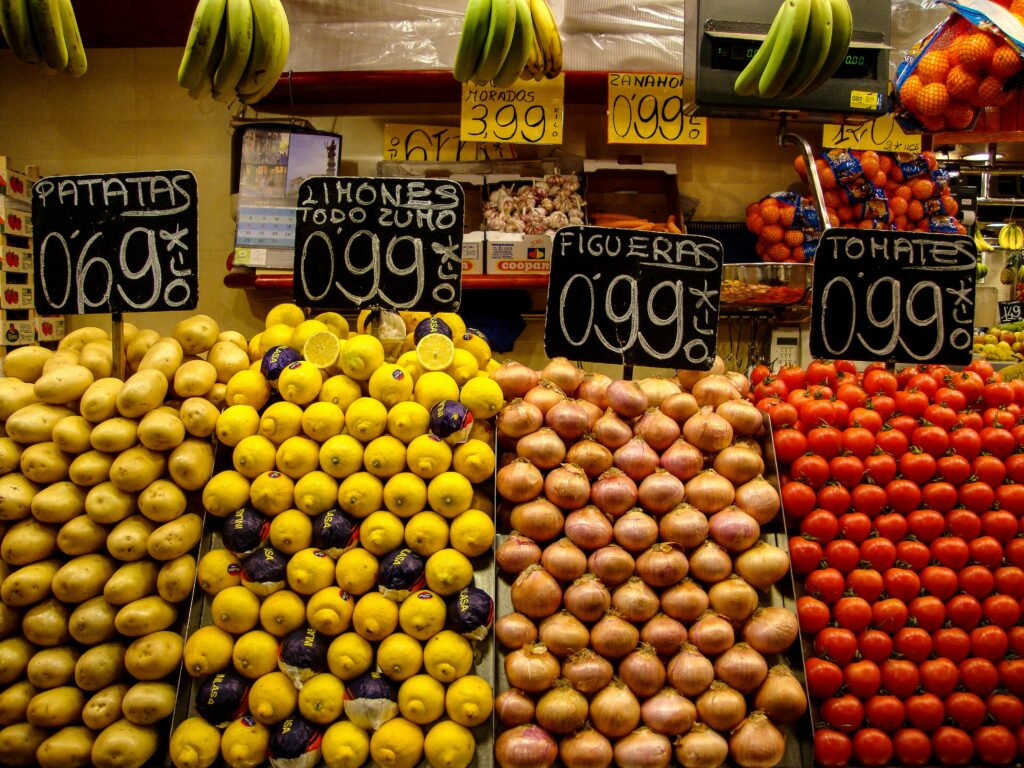
Price pressure on consumers in Germany eased slightly in March. At the same time, however, food prices became more expensive than average, according to preliminary calculations from the Federal Statistical Office. While the general inflation rate fell by 0.1 points to 2.2 percent in March, food prices were 2.9 percent more expensive year-on-year.
“While energy prices are reducing overall inflation, relatively high price increases for services and food were also recorded in March,” said Michael Heise, chief economist at asset manager HQ Trust in Bad Homburg near Frankfurt.
Expensive food
In March, consumers had to pay 2.9 percent more for food than a year earlier. Food prices had already risen significantly by 2.4 percent year-on-year in February. Many consumers are feeling this in their wallets when shopping.
Fueling and heating, on the other hand, were once again cheaper in March than a year earlier: Energy prices fell by 2.8 percent. In the previous three months, energy prices had been 1.6 percent lower than the previous year. However, given the volatile international situation, consumers should not rely on this, warns KfW expert Stephanie Schoenwald.
Price-driving services
Price pressure remains high for services, which include restaurant visits and car repairs. Statisticians recorded a price increase of 3.4 percent for March compared to the same month last year. In February, the figures were 3.8 percent and in January, 4.0 percent.
“The decline in inflation is primarily due to the fact that prices for services are no longer rising as rapidly,” said Commerzbank Chief Economist Jörg Krämer. “The weak economy is making it difficult for companies to pass on the sharply rising wages to consumers.”
According to the Bundesbank, inflation in services is slowly easing. The CDU/CSU and SPD want to provide further relief: In their exploratory talks for a future federal government, they agreed to permanently reduce the value-added tax on meals in restaurants and bars from 19 to 7 percent “to ease the burden on the catering industry and consumers.” It remains unclear, however, whether the industry will pass on the tax benefits to customers.
Billion-dollar debt package as inflation driver?
At the beginning of the year, inflation in Germany had slowed after three consecutive increases. In December, the inflation rate was still at 2.6 percent. According to statisticians, prices for goods and services rose by 0.3 percent from February to March.
Many economists expect the inflation rate to decline over the course of the year—albeit not quite as rapidly as initially hoped. According to the Ifo Institute, the inflation rate is likely to remain above the two percent mark in the coming months.
Some economists fear that the multi-billion euro financial package proposed by the CDU/CSU and SPD could fuel inflation. Without reforms, there is a “risk that the additional debt will create inflationary pressure. Subsequently leading to higher interest rates and the hoped-for growth stimulus fizzled out. The employer-friendly German Economic Institute (IW) recently warned. Higher inflation rates reduce people’s purchasing power because they can then afford less for one euro.
A warning for the ECB
A positive development from the perspective of many economists. The inflation rate, excluding volatile energy and food prices, fell to 2.5 percent in March. Down from 2.7 percent in February. Many economists believe that this core inflation rate better reflects the inflation trend than the headline rate.
The slowing inflation in Europe’s largest economy gives the European Central Bank some leeway. Which will decide on key interest rates on April 17. In light of declining inflation, the ECB has cut interest rates six times since June 2024. The deposit rate relevant for banks and savers is currently 2.50 percent. Whether the series of falling interest rates will continue is uncertain. Primarily due to the economic risks arising from tariff conflicts with the United States. (dpa/edited by phs).
Sources used:
- With material from the News agencies dpa and AFP, ntv.de, Reuters news agency, BBC News and CNN reports. The content has been independently analyzed and rewritten to provide original insights.

Welcome to TrendFiTech, your go-to source for the latest trending news, technology updates, and financial insights. Our mission is to provide accurate, informative, and engaging content to keep you updated on global trends, innovations, and market movements.
At TrendFiTech, we cover:
✅ Trending News – Stay informed with the latest happenings worldwide.
✅ Technology – Discover innovations, gadget reviews, and tech trends.
✅ Finance – Get expert insights on investments, business, and economic updates.
We are committed to delivering high-quality, original content while ensuring a user-friendly and informative experience.
Thanks!