

Tech stocks are suffering particularly: Price collapses after Trump’s attacks on the Fed chief
US President Trump is pushing ahead with the dismissal of the Fed chairman because the central bank isn’t cutting interest rates as requested. The threats aren’t going over well on Wall Street.
US President Donald Trump’s attacks on Federal Reserve Chairman Jerome Powell are unsettling investors across the board. On Wall Street, all three major indices fell significantly on Easter Monday, as not only the consequences of the president’s tariff policy but also confidence in the Fed’s independence is being undermined. The Dow Jones Industrial Average closed nearly 2.5 percent lower at 38,170 points. The broader S&P 500 fell nearly 2.4 percent, closing at 5,158 points. The Nasdaq index fell more than 2.5 percent to 15,871 points.
Magnificent Seven: the group of high-growth tech giants
In particular, losses by the “Magnificent Seven,” the group of high-growth tech giants, dragged down the technology-heavy Nasdaq . Trump doubled down on his criticism of Powell on Monday, blaming him for the impending slowdown in the US economy because the Fed had not lowered the key interest rate against his wishes. He called Powell “Mr. Too Late” and a “big loser.” Trump claimed there was “virtually” no inflation and that it was time for a “preemptive cut” in the key interest rate. The Fed had recently adopted a wait-and-see approach, given the potential impact of Trump’s tariff policy.
Countries that have an independent central bank grow faster
“Countries that have an independent central bank grow faster, have lower inflation, and have better economic outcomes for their populations,” said Jed Ellerbroek, portfolio manager at Argent Capital Management in St. Louis. “And politicians trying to influence the Fed is a really bad idea and very scary for the market.”
Concerns about the impact of the trade war with China also grew after the People’s Republic warned other countries against negotiating tariffs with the US at China’s expense. “Companies are (…) unsure how to respond as they await final answers from the United States on tariff rates,” Ellerbroek said. “What makes it discouraging, in my opinion, is the fact that we brought this situation upon ourselves; we are in this situation voluntarily, through the decision of this administration.”
The accounting season is starting
First-quarter earnings season is particularly anticipated this week, with dozens of companies in the spotlight. Of the 59 companies that have reported results so far, 68 percent have beaten Wall Street’s expectations, according to data from LSEG. Major earnings releases scheduled this week include Magnificent Seven members Tesla and Alphabet, as well as a number of high-profile industrial companies such as Boeing, Northrop Grumman, Lockheed Martin, and 3M.
Among individual stocks, the heavyweight in the artificial intelligence sector, Nvidia , fell 4.5 percent on Monday. Reuters had previously reported that Huawei Technologies plans to begin mass deliveries of an advanced AI chip to customers in China as early as next month. Electric car manufacturer Tesla lost 5.8 percent. According to the company, the production launch of a slimmed-down version of the Model Y has been delayed.
Dispute over key interest rate: Price losses after Trump’s attacks on the Fed chief
With angry posts, the US president is trying to force the central bank to cut interest rates – thereby attacking the Fed’s independence. The markets are reacting nervously.
US President Donald Trump has once again sharply attacked Federal Reserve Chairman Jerome Powell, questioning the central bank’s independence. Trump wrote on his online network Truth Social on Monday that Powell, 72, is a “loser.” He repeatedly urged the Fed chairman to immediately lower interest rates.
Dollar at its lowest level in 3 years
The markets reacted with uncertainty to the attacks: The Dow Jones closed 2.48 percent lower, the S&P 500 lost 2.36 percent, and the technology-based Nasdaq lost 2.55 percent. The US currency also weakened. The dollar fell to its lowest level in three years on Monday. The euro is trading at $1.1573.
Some stocks also suffered heavy losses. Shares of chipmaker Nvidia slid 4.5 percent, while those of billionaire Elon Musk ‘s electric car manufacturer Tesla fell 5.8 percent. Only the value of the cryptocurrency Bitcoin rose, to more than $87,000.
Interest dispute
Trump is relying on low interest rates to boost US exports and justify his chaotic tariff policy. Powell, on the other hand, has repeatedly warned that the tariffs imposed by Trump on global trading partners could lead to higher prices and lower economic growth in the US. On Monday, the US president doubled down, claiming on Truth Social that there is currently “virtually” no inflation. It is time for “preemptive cuts” in the key interest rate. The central bank, on the other hand, recently emphasized that its preferred inflation measure continues to hover above its desired target.
The US President has already threatened to dismiss the Fed chairman. This would be an unprecedented step. Trump himself nominated Powell as chairman of the central bank during his first term in 2018. The central bank’s independence from politics is the most important principle of its work. Powell’s second four-year term expires in May 2026.
“A big loser” – Trump insults central bank chief and causes stock markets to crash again
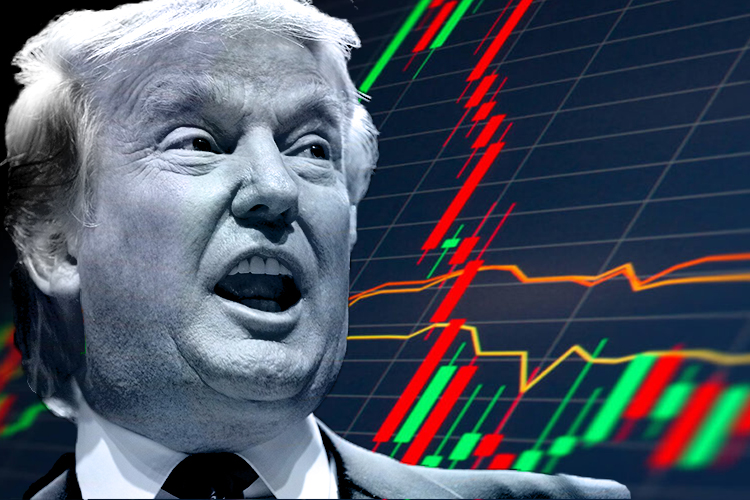
The US President is urging Federal Reserve Chairman Powell to cut interest rates, but Powell sees inflation risks due to the administration’s tariff policy. Trump refuses to accept this, is considering firing Powell, and is now adding insult to injury. This is causing uproar and dismay in the financial markets.
US President Donald Trump’s attacks on Federal Reserve Chairman Jerome Powell are unsettling investors across the board. On Wall Street, all three major indices fell significantly on Easter Monday, as not only the consequences of the president’s tariff policy but also the impact of the Fed’s independence are now being undermined.
The director of the US National Economic Council, Kevin Hassett
The director of the US National Economic Council, Kevin Hassett, said on Friday that the US president was considering whether he could dismiss Powell. Chicago Fed President Austan Goolsbee, in a response on Sunday, emphasized that the independence of central banks from political influences is truly important for their work.
On Monday, Trump doubled down, writing on Truth Social that there is “virtually” no inflation. He said it was time for “preemptive cuts” in the key interest rate. The Federal Reserve, however, had recently emphasized that its preferred inflation measure continued to hover above its desired target. He also directly insulted Federal Reserve Chairman Powell. He blamed him for the impending loss of momentum in the US economy because the Fed had not lowered the key interest rate against his wishes and called him “Mr. Too Late” and a “major loser.”
The Dow Jones Industrial Average closed nearly 2.5 percent lower, the broader S&P 500 fell nearly 2.4 percent, and the Nasdaq index lost more than 2.5 percent. Losses by the “Magnificent Seven,” the group of high-growth tech giants, particularly dragged the tech-heavy Nasdaq down. The dollar also continued to decline, now trading at $1.15 per euro. At the same time, gold reached a new record high of $3,430 per troy ounce.
the impact of the trade war with China
Concerns about the impact of the trade war with China also grew after the People’s Republic warned other countries against negotiating tariffs with the US at China’s expense. “Companies are (…) unsure how to respond as they await final answers from the United States on tariff rates,” Ellerbroek said. “What makes it discouraging, in my opinion, is the fact that we brought this situation upon ourselves; we are in this situation voluntarily, by the decision of this administration.”
Automaker Tesla was particularly hard hit by the stock price declines on Monday. Its shares lost 5.8 percent. Analyst Dan Ives of Wedbush Securities had been cautious about the electric car manufacturer, whose CEO Elon Musk also works for Donald Trump’s administration. The expert called for Elon Musk to quit his government work and focus on Tesla.
Shares of chipmaker Nvidia
Shares of chipmaker Nvidia also slid another 4.5 percent. The AI profiteer’s shares had already suffered on Thursday following the news that the US government had banned the chipmaker from selling its H2O chips in China. Nvidia shares have lost more than 28 percent year-to-date, almost double the Nasdaq 100’s loss.
Trump’s attacks on Powell also unsettled investors in Asia on Tuesday. “Investors expect that growing uncertainty regarding US monetary policy will negatively impact financial markets and the economy as a whole,” said Hiroyuki Kikukawa, chief strategist at Nissan Securities Investment. Concerns about the impact of the trade war with China are also growing.
US stock markets react with price losses to Trump’s criticism of Powell
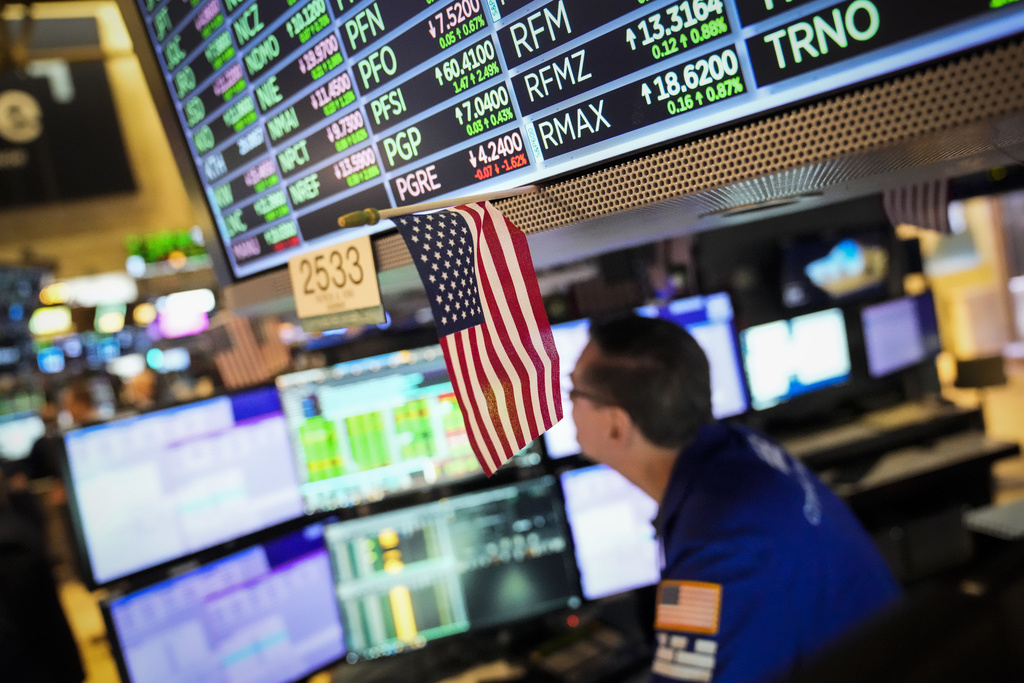
US President Donald Trump is apparently considering removing Federal Reserve Chairman Jerome Powell because he refuses to lower interest rates. The Dow Jones and S&P 500 are plummeting.
The US stock market reacted sensitively to President Donald Trump’s renewed criticism of Federal Reserve Chairman Jerome Powell. Trump repeatedly urged Powell to cut interest rates immediately, otherwise the economy could stall, Trump wrote on his short message service Truth Social. “There may be a slowdown in the economy unless Mr. Too Late, a big loser, cuts interest rates NOW,” the president wrote.
The stock markets reacted with significant losses . The Dow Jones and S&P 500 lost nearly 2.5 percent. The Nasdaq technology index lost just over 2.5 percent. The US dollar fell to its lowest level in three years. Meanwhile, the yield on ten-year US Treasury bonds rose to just over 4.4 percent – a result of weaker demand.
Investors are driven by concerns about a loss of the Federal Reserve’s independence. A Trump adviser already stoked concerns about Trump’s influence on US monetary policy on Friday by stating that the US government is considering options for dismissing Powell.
Dismissal would be an unprecedented step
The U.S. Federal Reserve is traditionally an independent institution, not bound by government directives. It has recently left its key interest rate in the range of 4.25 to 4.50 percent. While Powell acknowledged signs of a slowdown in economic activity last Wednesday. Which a rate cut could counteract, there are also fears of rising inflation due to Trump’s tariff policy. Higher interest rates could help counteract this.
By law, the US president can only dismiss the Federal Reserve chairman for good cause. Powell recently stated that he would remain in office. A dismissal would be an unprecedented step that would further undermine confidence in the US financial center. US Treasury bonds, historically considered safe investments, have been under severe pressure since the Trump administration announced high import tariffs.
Trump himself nominated Powell as Federal Reserve Chairman during his first term in 2018. Powell’s term expires in May 2026.
Sources used:
- With material from the News agencies dpa and AFP, ntv.de, Reuters news agency, BBC News and CNN reports. The content has been independently analyzed and rewritten to provide original insights.

Welcome to TrendFiTech, your go-to source for the latest trending news, technology updates, and financial insights. Our mission is to provide accurate, informative, and engaging content to keep you updated on global trends, innovations, and market movements.
At TrendFiTech, we cover:
✅ Trending News – Stay informed with the latest happenings worldwide.
✅ Technology – Discover innovations, gadget reviews, and tech trends.
✅ Finance – Get expert insights on investments, business, and economic updates.
We are committed to delivering high-quality, original content while ensuring a user-friendly and informative experience.
Thanks!