
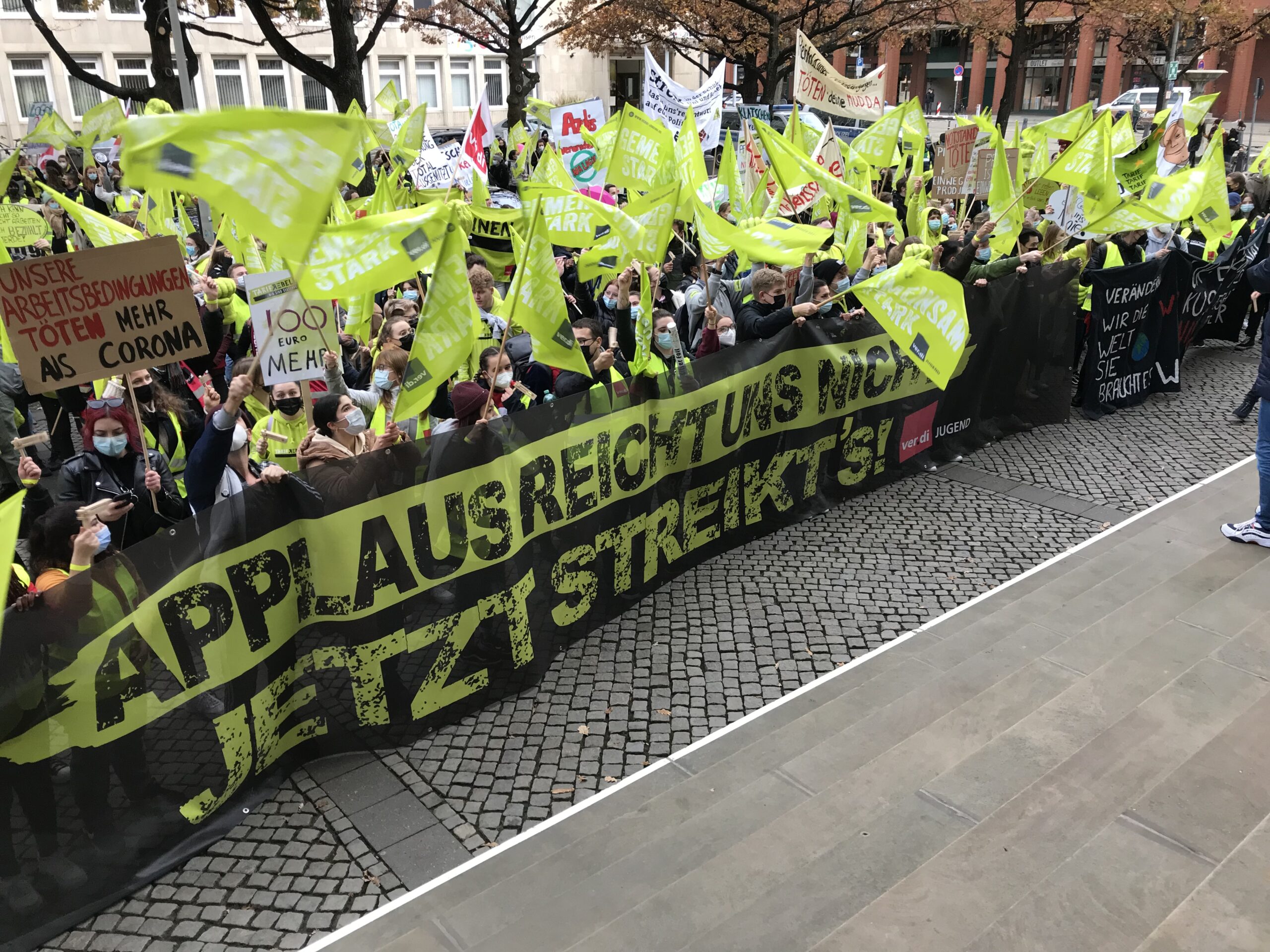
Verdi NRW on collective agreement: “difficult result”
According to Verdi, the collective bargaining agreement for the federal and local public sector fell short of expectations in some respects. The agreement applies to approximately 640,000 employees in North Rhine-Westphalia.
More pay, one more day of vacation, more flexible working hours: After lengthy negotiations, unions and employers have reached a collective bargaining agreement for the more than 2.5 million employees in the federal and local public sector. According to the union, the agreement applies to approximately 640,000 employees in North Rhine-Westphalia.
The core of the agreement is an increase in incomes of 3 percent on April 1 of this year and a further 2.8 percent in May of next year.
In North Rhine-Westphalia, too, employees in district and city administrations, in local public transport, at airports, savings banks, theaters, municipal hospitals, daycare centers, waste management, and even federal agencies temporarily went on strike for several weeks. According to Verdi, the effects were felt nationwide.
According to Verdi regional chairman Gabriele Schmidt, sectors such as local public transport, savings banks, and music schools are disappointed that their concerns have not been addressed. Furthermore, the issue of working hours and the associated relief measures have fallen short of expectations.
Agreement with the federal government and municipalities: More money for public sector employees
The wage dispute in the public sector has been resolved; unions and employers have reached an agreement. Federal and local government employees will receive a total of 5.8 percent pay increase in two stages.
The collective bargaining parties in the federal and local public sector have reached an agreement. “We have reached a collective bargaining agreement that provides a good balance in difficult times,” said Acting Federal Minister of the Interior Nancy Faeser (SPD), who represented the federal government in the negotiations. Working conditions in the public sector will become more flexible, modern, and attractive.
Ver.di head Frank Werneke, speaking on behalf of the employees, stated that accepting the result was not easy for the union: “It is a difficult result in difficult times.” Volker Geyer, chief negotiator for the dbb Beamtenbund union, nevertheless emphasized: “Everyone can identify with this agreement.”
The more than 2.7 million employees are to receive a three percent increase starting April 1, but at least €110 more per month. A further increase of 2.8 percent is to follow starting May 1, 2026. The collective agreement is to run for 27 months, i.e., until the end of March 2027. The basis for the agreement is an arbitration ruling that proposed a two-stage wage increase of 5.8 percent.
The agreement also provides for a significant increase in monthly shift and rotating shift allowances starting in July. Furthermore, employees will receive a higher 13th month’s salary starting in 2026 and an additional vacation day starting in 2027. According to the Interior Ministry, the cost of the collective bargaining agreement for federal employees alone is approximately €1.94 billion.
Many municipal employees
The union ver.di and the German Civil Service Federation (dbb) had demanded a total wage increase of eight percent, or at least a monthly increase of €350. Employers had hesitated to submit an offer due to tight public finances, but eventually put forward a total of 5.7 percent.
The federal government has approximately 132,000 employees, and local authorities have approximately 2.6 million. The states have withdrawn from the collective bargaining agreement with the federal government and local authorities and are negotiating separately.
Geyer: “Important progress lies in the details”
Geyer continued: “It is crucial that the components we demanded—linear increase, social component, working time sovereignty, and relief—are all part of the agreement. Everyone can identify with this agreement.” At the same time, however, a more forward-looking outcome would have made sense, the dbb vice president added. “But unfortunately, we had to wring every cent, every minute, and every little progress from the federal government and local authorities with endless effort. At no point was it evident that employers wanted to shape the future.”
Looking ahead to the coming years, Geyer predicted that collective bargaining negotiations would become more protracted and tougher: “The public sector must generally become more attractive. Currently, there is a shortage of 570,000 employees. In the next ten years, another third of our colleagues will retire. To compensate for this extreme loss, pay and working conditions must continue to improve significantly, otherwise we will soon be completely out of date on the labor market.” Finally, Geyer called for the collective bargaining agreement to be applied to the civil service sector at the same time, in the same content, and in a system-appropriate manner: “We will immediately begin discussions with the Bundestag and the new federal government on this matter.”
The key points of the agreement:
Linear salary increases
- from 1 April 2025 by 3 percent
- from May 1, 2026 by a further 2.8 percent (term 27 months, until March 31, 2027).
Social component/minimum amount
A minimum of €110 is required for the first increase. This will result in a disproportionate increase in the standard salary in pay groups (EG) 1 to 5, as well as in EG 6 up to level 5, in EG 7 up to level 4, in EG 8 up to level 3, in EG 9a up to level 2, and in EG 9b up to level 1. This will result in increases of up to 4.67 percent in the first step.
Remuneration and employment of trainees
The remuneration of trainees, dual students and interns will also increase in two steps: by 75 euros from 1 April 2025 and by a further 75 euros from 1 May 2026.
If the company needs them, trainees and dual students will be offered permanent employment if they have completed their training with at least a grade of “satisfactory”.
Instruments to relieve the burden on employees
From 2027, there will be an additional day of vacation for all employees (including trainees).
The annual special payment is to be increased from 2026:
- Federal Government: EG 1 to 8: from 90 to 95 percent, EG 9a to 12: from 80 to 90 percent, EG 13 to 15: from 60 to 75 percent
- VKA: 85 percent in all EG, 90 percent in EG 1 to 8 in the areas BT-K and BT-B
There should be an option to convert this annual bonus (except in hospitals and nursing and care facilities) into up to three additional days off. To compensate for the lack of conversion option, the annual bonus in groups 1 to 8 in hospitals and nursing and care facilities should be increased to 90 percent.
The allowance for permanent shift work is to be increased from €40 to €100 per month starting July 1, 2025. The allowance for permanent rotating shift work is to increase from €105 to €200, and in hospitals, nursing, and care facilities from €155 to €250. The hourly rates for non-permanent shift work and rotating shift work are to be increased accordingly. These allowances are to be adjusted starting in 2027.
More working time sovereignty
At the company level, a long-term working account should be established through a company or service agreement. The resulting credit balance can be used for sabbaticals, reduced working hours, and time off for childcare and caregiving, for example.
Flexitime regulations will be more precisely defined in the future, and capping of hours will be avoided. If a long-term account is set up, it will also be possible to transfer overtime hours to this account. In the future, overtime will also be mandated to avoid capping.
Employees and employers can agree – voluntarily for both parties – to increase weekly working hours to up to 42 hours starting in 2026. This can be agreed for a period of up to 18 months. Employees will then receive the correspondingly increased salary, correspondingly increased other salary components, and a bonus for each additional hour. The bonus amounts to: in EG 1 to 9b: 25 percent, in EG 9c to 15: 10 percent of the salary scale for level 3 of the respective EG.
More money, more vacation – federal government and municipalities reach agreement in collective bargaining
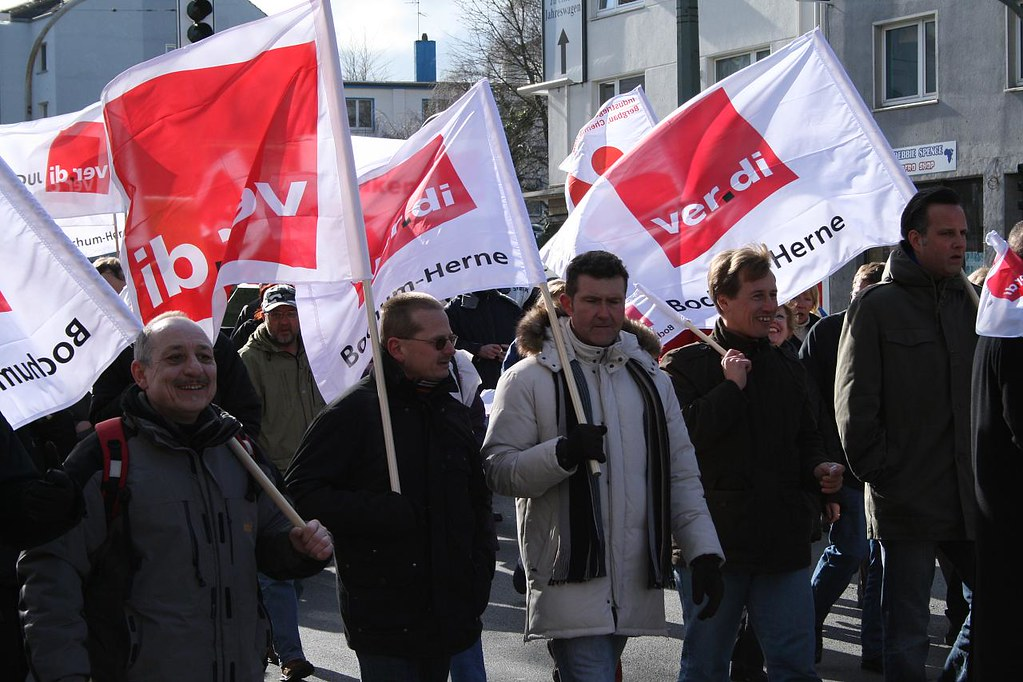
The negotiations focused on higher wages and more flexible working hours for approximately 2.5 million employees. Now, the unions and employers have reached an agreement. Among other things, a two-stage wage increase is planned.
The collective bargaining parties in the federal and local public sector have reached an agreement. According to this agreement, the more than 2.5 million employees will receive pay increases in two stages, as unions and employers announced in Potsdam on Sunday.
Acting Federal Minister of the Interior Nancy Faeser ( SPD ) praised the agreement: “We have reached a collective bargaining agreement that provides a good balance in difficult times. We are making working conditions in the public sector more flexible, modern, and attractive.” The new collective agreement is a sign of respect for employees and for what they achieve. At the same time, Faeser explained, the federal government has “reached the limits of what we can be held accountable for in a difficult budget situation.”
Verdi head Frank Werneke, speaking on behalf of the employees, stated that accepting the result was not easy for the union: “It is a difficult result in difficult times.” However, Volker Geyer, the chief negotiator for the dbb Beamtenbund union, emphasized: “Everyone can identify with this agreement.”
More flexible working hours
The agreement is based on an arbitration ruling from the end of March. According to this ruling, employees will receive a linear increase of three percent, with a minimum of €110, starting April 1. An increase of 2.8 percent will follow starting May 1, 2026. The 13th month’s salary will also be increased.
The package also includes higher shift allowances. The new collective agreement is to run retroactively from January 1, 2025, for 27 months. Warning strikes or strikes in this part of the public sector are likely to be off the table until then. Separate negotiations will be held for state employees in the fall.
No one can be pressured to work more – that is part of the collective agreement.
Frank Werneke, Verdi boss
Part of the Potsdam agreement package also includes more flexible regulations regarding working hours and days off. Starting in 2027, there will be an additional vacation day. Furthermore, most employees will be able to convert portions of their 13th month’s salary into up to three days off. Faeser explained: “We are introducing a time-instead-of-money model for more days off.” Maike Finnern, chairwoman of the Education and Science Union (GEW), praised this “as a step toward greater personal responsibility over working hours.”
Special rules apply to municipal hospitals. Employees may voluntarily and temporarily increase their working hours to up to 42 hours per week.
According to sources involved in the negotiations, the unions raised concerns about this point. They feared pressure on employees to work longer hours. A compromise was eventually reached. “No one can be pressured to work more – that’s part of the collective agreement,” said Werneke. “Those who voluntarily work more will receive a bonus for the additional hours.”
Employees in essential jobs
The more than 2.5 million federal and local government employees work in a variety of important jobs, from administration to daycare centers and waste collection to local public transport and airports. The collective bargaining dispute affected many citizens because of repeated warning strikes since January. “The cost of the collective bargaining agreement over a period of 27 months is approximately €1.94 billion for federal employees alone,” the Interior Ministry stated.
The trade unions Verdi and the dbb Beamtenbund represented the employees. While the Verband Kommunaler Arbeitgeberbund (VKA, Association of Municipal Employers) and the Federal Ministry of the Interior represented the employers. After three rounds, the negotiations were declared a failure in mid-March. This was followed by arbitration led by former CDU politician Roland Koch and former Bremen State Councilor Henning Lühr (SPD). Although the key points had been clarified, the fourth round of negotiations in Potsdam progressed very slowly.
Originally higher demands
The unions originally demanded an eight percent pay increase, or at least €350 more per month. As well as, among other things, at least three additional days off per year. They wanted the collective agreement to run for only one year. The employers’ side called this unaffordable.
Conclusion
In the third round of negotiations, the employers reportedly offered a 5.5 percent pay increase. As well as a higher 13th month’s salary and higher shift allowances. The duration of the contract remained open. This wasn’t enough for the unions. Ultimately, the employers’ side appealed to arbitration, arguing that the unions hadn’t moved enough.
In the future, collective bargaining negotiations will become more protracted and tougher, says Geyer. Negotiator for the Civil Service Union: “Currently, there is a shortage of 570,000 employees.” Furthermore, another third will retire in the next ten years. Pay and working conditions must continue to improve significantly to make public service more attractive.
Sources used:
- With material from the Reuters news agency, rtr , dpa , hea. With information from News Channels. Statement and reports from reputable news sources, including Reuters, Wikipedia, BBC, CNN. The content has been independently analyzed and rewritten to provide original insights.

Welcome to TrendFiTech, your go-to source for the latest trending news, technology updates, and financial insights. Our mission is to provide accurate, informative, and engaging content to keep you updated on global trends, innovations, and market movements.
At TrendFiTech, we cover:
✅ Trending News – Stay informed with the latest happenings worldwide.
✅ Technology – Discover innovations, gadget reviews, and tech trends.
✅ Finance – Get expert insights on investments, business, and economic updates.
We are committed to delivering high-quality, original content while ensuring a user-friendly and informative experience.
Thanks!